Growing up with the Leicestershire Schools Symphony Orchestra
1966 – 1971
YOUTH MAKES MUSIC
Growing up with the Leicestershire Schools Symphony Orchestra
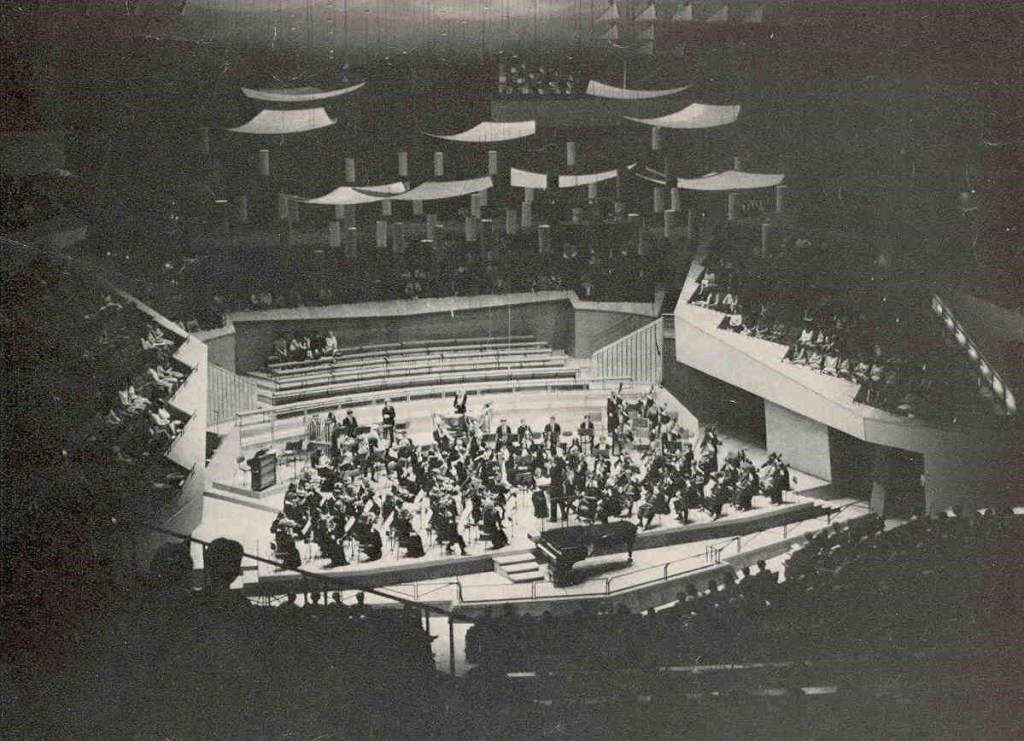

Philip Monk
Preface
I suppose the idea is a bit strange. Why on earth would I choose to write about my childhood after all this time?
Well, in truth, it’s because I believe that I had a special childhood. Not because I’m special, but because I was part of something that was very special – the Leicestershire Schools Symphony Orchestra.
Obviously it’s easy to be nostalgic at this time in my life. There’s sometimes sorrow at the loss of one’s youth, and a tendency to believe that things were better in those times than they actually were. But this short story isn’t just an exercise in sentimentality. It’s my own very personal account of what it was like in those days to be part of the County School of Music and play in the Leicestershire Schools Symphony Orchestra. It’s my own private way of paying tribute to the orchestra and to Eric Pinkett.
Perhaps I believe that once I’ve finished it I can see those days within some sort of lifespan context and come to terms with where I am now, and what I may do in the future. Perhaps I rather hope that other close friends who were part of this period in my life will read it, enjoy some of the stories, and remember the good times that we had together. But my overriding motivation is an inner urge to set something down on paper about those days before I forget the details altogether. I’ve got other projects planned and I can’t seem to give them my complete concentration until I’ve fulfilled this strange need to put the story into words and my record of those days is complete.
Were those of us who were musicians different to other kids? I’m convinced we were. Other children had their mates, their football and their Boy Scouts, and so on. But I don’t think these activities stand comparison, even taking into account my own perspective. It’s not just how close we all were; it’s about the uniqueness of exploiting a talent and working together to create an entity that was so very special. It’s not an experience that you can replicate in adult life because of the timely convergence of enthusiasm, youthfulness, and innocence. Even if some of us are still musicians today, it’s not quite the same thing.
I’ve thought long and hard about including my own personal relationships. Perhaps I should have just written a straight account of what it was like to be in the orchestra at that time. But the difficulty is that I can’t separate the two. If this offends some and amuses others, then I offer my apologies to the former group, and the latter won’t mind anyway.
But everything I’ve written is how I remember it even if I impose my own subjectivity. Certain events took place that I’m not so proud of now and, in retrospect, some of them even make me wince with embarrassment. But that’s the whole point about growing up and the integral childishness and immaturity of youth. We all make mistakes at that age; how else do we learn?
Why bother with all this when Eric did such a good job in his book, Time to Remember? Well, Eric told the story of the County School of Music, and of the way in which he managed to turn his vision into reality, together with his own part in creating such an astonishing and marvellous organisation. I don’t seek to compare with his own record of events, except perhaps to re-emphasise his own contribution by adding some further insight into the scope of his achievement.
My story is merely told from the perspective of one of the hundreds of children who have played in the Leicestershire Schools Symphony Orchestra. It’s only one small part of the tale that continues to this day. It’s about the one thing that Eric couldn’t know – what it felt like to be one of the players; what went on behind the scenes; and, most of all, what it meant to spend one’s youth growing up with classical music.
Acknowledgements
1) My thanks to friends for their help in checking my facts and correcting my mistakes. In addition, in some passages, their own memories and anecdotes have helped refresh my memories.
2) Particular thanks must go to Dave Smith who allowed me to reproduce some of the many photographs that he took of the orchestra over the years, and John Whitmore who checked and corrected some of my dates, places and other details.
3) Where I’ve mentioned the names of certain girls at various places in the book, I’ve gained their permission to do so – if I’ve been able to contact them. Wherever I haven’t obtained such approval, I’ve respected their anonymity.
Notes
1) In the text, where a number in bold appears thus (17) after a concert date, it refers to the corresponding program number in Appendix A. In turn, this program number shows details of the actual program performed on that specific day.
2) My apologies for any omissions in the lists of players. It’s difficult to say precisely who was in the orchestra at a specific point in time since there were always at least one or two players in the process of joining or leaving.
Chapter One
1961-1963
It was my Dad’s idea. I’m not sure why he decided to take me to Market Harborough Town Band at the tender age of nine and ask them if they would teach me to play the cornet. Perhaps it was his own love of music or maybe he thought I’d be the next Louis Armstrong. Anyway, I did what I was told and went along to our local band, where I was introduced to the bandmaster and shown how to hold a cornet. By the end of the first practice session I had managed to blow a primitive note on it, and, to my surprise, was even allowed to take home a battered instrument and an old scale book. I was the newest recruit to a small band of six children whom the bandmaster, Mr Yarrow, would teach twice a week before the senior band rehearsal started.
I wasn’t that keen really. It appeared to me that playing with my friends outside was much more fun, especially as I began to appreciate how difficult it was to master the instrument. I would have given up but my father was determined to make me continue, even to the extent of refusing to allow me to go out to play until I’d completed my compulsory thirty minutes practice every evening.
So my Dad took me from our house in Gumley to band rehearsals in Market Harborough twice a week, and the combination of this attendance – together with his persistence in making me practice – eventually began to pay off. I still couldn’t manage more than a few simple tunes and scales but it didn’t sound quite so much like a ship’s foghorn as it had done previously. My playing slowly started to improve and I began to grasp the rudimentaries of musical notation.
By 1962 I had improved enough to join the senior band. I was allocated to the second cornet bench alongside a boy called Glenn Pollard.
I was ten years old in May and, shortly afterwards, was asked to play in a concert for the first time. On June 24th, the band was to be one of the guest bands invited to play on the bandstand at Northampton’s Abington Park.
The incident that I remember most from this occasion wasn’t the actual performance of the band. During the interval, all the boys were allowed to play golf on the putting green. We had only got to the second hole when a boy swiped his club at the ball, missed, and hit a twelve-year old cornet player named Colin Downes behind the ear. Colin’s wound was soon pouring with blood while the rest of us stood there aghast as it ran onto his shirt and uniform. He had to be taken to hospital to have the cut to his head stitched up and I have never stood behind someone playing golf ever since.
The improvement in my standard of play continued and I began to enjoy the instrument a little more than I had previously. I got the scales off pretty well and started to tackle some of the more difficult pieces. I still needed my Dad’s occasional coercion to make me practice, but now and again I would pick up the cornet myself without needing to be told.
By the Easter of 1963, although I was not yet eleven years of age, I was deemed ready to play in my first senior band contest at the De Montfort Hall in Leicester. These were the annual area qualifying rounds for the national championships that are held at the Albert Hall in London, and other venues, in October. Competition was stiff and we weren’t placed in the top four – the minimum result to go through to the nationals.
We gave various concerts in the summer and, by the autumn, Mr Yarrow decided that some of the youngsters should become accustomed to the contest atmosphere by entering four of us in a junior quartet competition. He must have thought we were reasonably proficient because he entered us in the Junior (under 15) Championships of Great Britain to be held in Coalville on the 21st September. To our astonishment, our quartet came 5th and we each received a medal. Fifth in the UK under 15! I was astonished at our achievement and even more determined to improve my own standard of play.
The next week our quartet was entered in the Northamptonshire championships, but on this occasion I was also invited to take part in a solo contest for the first time. The event took place on the 28th September at the Kettering Rifles Band clubroom.
I was too nervous to do well and dried up completely. Even worse, later in the contest another youth played the same piece that I had chosen – but immaculately – and won the contest. His name was Jimmy Watson. He became the champion cornet player of Great Britain two years later (both the Junior and Senior in the same year) and became quite famous as a performer and conductor. Little did I know then that he and I would meet again in very different circumstances.
Our quartet failed to be placed this time but, undeterred, we put our name down for the next competition at the same venue.
However, the most important event of the year had already taken place; I passed my eleven plus exams and by September had moved on to attend Market Harborough Grammar School.
Chapter Two
1964
I’d spent the Autumn 1963 term getting used to the complete change of environment in my new school. But in the early part of the following year I gradually became aware that there was an orchestra at the school. I heard them play one day in assembly; they were not good to listen to.
I thought about whether to tell the music teacher that I could play an instrument or not, having to judge whether the disadvantages of being part of something as awful as the school orchestra was worth the opportunity to show off. There was another reason why this was a decision that I couldn’t take lightly. I was a cornet player and proud of it. I could see that if I joined the orchestra I would have to play the trumpet. I rather despised the trumpet at the time because I knew that trumpet players played with a ‘straight tone’. I’d spent the previous two years cultivating a ‘vibrato tone’. Cornet players aspire to this type of tone (because it originally imitated the vibrato of singers) and it is therefore considered highly desirable in the brass band world. However my mind was made up for me one day when the teacher asked in class whether anyone would like to join the School Orchestra and I decided to take the plunge.
One of the unfortunate side-effects of my practice and my consequential accomplishment at a comparatively early age was that I was a bit of a big-head! I didn’t really appreciate at the time that the only reason that I had achieved any level of skill at all was not due to some inherent talent but that my Dad had forced me to practice or else! Anyway, joining the School Orchestra seemed like a good way of showing off even more than I usually did, so I told the teacher that I could already play the cornet and he invited me to give him a demonstration. Afterwards, he said that I should not only enrol in the School Orchestra but also join something I’d never heard of called the ‘County Orchestra’. He arranged for me to stay late after school the following week and play for a certain Mr Neale who was a County Orchestra music teacher.
In due course I met Mr Neale and he heard me play. As a result he invited me to join his military wind band, I agreed readily, and from that day onwards took part in the wind group rehearsal every Tuesday evening. Being very confident of my own prowess, I overwhelmed the other players and played twice as loudly as the rest of them put together. After four weeks of this he called me up to the front of the group. Expecting praise, I was slightly embarrassed to hear him say:
‘Philip, you’re on a long sloping hill and you’re tumbling to the bottom. At the bottom of the hill there’s a big ‘D’. One day you’ll slide all the way to the bottom of the hill and you’ll recognise the ‘D’. And do you know what the ‘D’ stands for?’
‘No’, I replied.
‘Discretion’.
I hadn’t the faintest idea what he was talking about.
Anyway, on my first rehearsal with the School Orchestra I was in for a big shock – I wasn’t as great a player as I thought I was! Although the rest of the orchestra was pretty awful, there was a girl trumpeter who was red-hot and much better than me! Her name was Diane Henderson. She was three or four years older than me and played in the County Orchestra. I remember asking her how often she practiced and she replied one hour every night for the trumpet and an hour on the piano without fail. My God!
In no time at all she got me and the rest of the brass players organised and we were soon having regular brass ensemble practices after school.
————-
In the meantime I was back again in the annual solo brass band contest at the Kettering Rifles club. Even though I played quite well, Jimmy Watson was there again in the Junior contest and came first. It was a surprise to me that his brother Bobby, an excellent tenor horn player, pipped him at the post to win the overall open solo section.
————-
After a few weeks in the wind band, Mr Neale invited me to join the County Orchestra. I wasn’t quite sure what this involved but it sounded interesting. Eventually, the day came for my first rehearsal and my father took me to Market Harborough to catch one of the buses that took children to the regular Saturday morning orchestra sessions at Birstall. Someone on the bus told me that there were three orchestras – Junior, Intermediate and Senior but I wasn’t sure which group I was supposed to be playing with. I arrived, very nervous, knowing no-one and equally ignorant about where to go or what to do. Someone must have taken me under their wing because I duly found myself sitting n an orchestra at the end of a row of about seven trumpet players.
It transpired that I was in the Junior Orchestra but no-one appeared to pay any attention to me. We proceeded to play the first piece, which seemed to me to be quite boring and consisted mostly of counting bars rest. After the continuous involvement that I’d experienced in brass bands, the music seemed incredibly long drawn out. I hadn’t the slightest clue whether anyone could hear what I was playing, and, even worse, the part I had to play was absurdly easy.
There was an interval halfway through the morning and I spotted Mr Neale and went over to him. I was still playing my cornet and he asked me if I could find a trumpet to play. I went home and the following week asked at school if they had a trumpet that I could borrow. As luck would have it, they found a battered old instrument and I gave it a go. I was quite concerned that playing the trumpet would ruin my cornet technique and was determined to segregate the two styles completely.
And so began a routine of travelling to Birstall for orchestra rehearsals every Saturday morning during term time which, although I didn’t know it at the time, would last for the next seven years.
I didn’t really enjoy it much for the first few weeks because the music was too easy and it didn’t really seem to matter whether I was there or not. Just when I was considering giving it all up Mr Neale came to see me and said that I should start going to the Intermediate Orchestra instead.
I gratefully accepted his recommendation and the following Saturday turned up at a different school in Birstall for my first rehearsal with the Intermediates.
My initial impression of being in this new orchestra was that it seemed so vast. The hall was crammed with children in every section. I think there must have been about one hundred and twenty of us. I was introduced to the conductor, a Mr. Hayworth, and also met a boy called Andrew Holland, and we quickly became friends. I was impressed with Andrew because, at thirteen, he was a bit of an old hand and seemed to know all the girls.
I began to notice the girls. I was pretty pubescent at the time and females were beginning to arouse my attention more than they had previously. I began to see possibilities, especially when I hung around with Andrew. His speciality was buying chocolate peanuts and attempting to flick them down the spectacular (as it seemed to me at the time) cleavage of a girl oboe player called Helen. She protested in vain and we spent most of rehearsals laughing, messing about generally, and trying to chat up any girl that would tolerate the pair of us.
The orchestra appeared to me to make a huge disorganised noise. Sometimes this was exciting but often you couldn’t really get much of an impression of the overall sound, only of the instruments nearest to you. I was sitting at about eighth trumpet. The music was mostly straightforward classical works with one or two more modern ones occasionally thrown into the repertoire. If I was to enjoy playing a piece, it had to meet one of three criteria; either I had heard it before; I had a lot to play in it; or the part allowed me to play very loudly.
I remember playing the Karelia Suite in the first category (it was the theme tune to the TV programme ‘This Week’), Holst’s Suite in F in the second, and Malcolm Arnold’s Four Scottish Dances in the last.
After a number of rehearsals I played my first concert with the orchestra on the 19th of December at Longslade School in Birstall (1). An older boy called Andy Smith played the first movement of the Beethoven Piano concerto. My parents had had to buy me my first black blazer for the occasion to go with the dickie bow that I’d used in my band concerts. I don’t remember much of the actual performance but this was probably because I was concentrating so hard on not making a mistake on my first time out.
Chapter Three
1965
The year began and, besides doing all the other things you do as a twelve-year-old, I continued to divide the time devoted to music between the band and the Intermediate Orchestra.
The music in the orchestra became a little more difficult. Although technically it was well within my capability, some parts were written for trumpet in the key of C, A or, even worse, E. This meant that we all had to transpose from our natural key of B flat and this was extremely difficult if you weren’t used to it. The leader of the trumpet section, Steve Lenton, asked me to demonstrate a particular passage to him and to the other trumpet players. I had been waiting for this opportunity for ages because I already knew that I was a good player for my age and wanted to show off (not a good aspect to my character unfortunately!). Most of the other trumpet players hadn’t had the constant exposure to the technical brass band stuff that I had experienced so they were at a relative disadvantage. Unfortunately, although I could have easily managed it in our natural key of Bb I had to transpose this particular piece and made a real mess of it. I was mortified that I had fluffed my big chance in front of everyone and spent the whole bus journey home seething at the injustice of life.
It was about this time that I began to be aware of all the social aspects of being part of the orchestra. I started to make new friends and we all formed groups at break times and swapped gossip. A central theme of the break was the visit to the tuck-shop, where we would scoff Wagon Wheels, Potato Puffs, and other assorted goodies.
Summer came and there was great excitement for me at the news that I was about to go to Colwyn Bay on my first orchestra course. I’d never been away from home before. I didn’t really know what going on a course involved but I’d been told that we were going to stay in a school while we practised for a concert. I discussed it with one of my new friends, a trombone player from Market Harborough called Len Tyler. He was also going and he became my closest friend on the course even though he was a couple of years older than I was.
The big day came and my Dad took me to catch the bus that would take us to the course. The bus took us to Leicester and then onwards to Colwyn Bay. We arrived in the afternoon and were shown a classroom and my first mild surprise was to be handed some collapsible camp beds that we were expected to erect and sleep on. No-one showed me how to put these awkward contraptions together and I had to gawp around stupidly to see how the others did it. Worse still, nearly everyone else seemed to have sleeping bags to go on top of the beds. I hadn’t been warned about bringing one (not that I’d ever seen a sleeping bag before) and I had to make do with a sheet and some blankets, which was decidedly less cool.
So this was my introduction to dormitory life on an orchestra course for the first time. I quickly learned that when there’s a group of you sleeping on camp beds overnight in a classroom, there’s always going to be some fun. This fun consisted of talking, generally messing around, and not going to sleep when the lights were switched off. I learnt some amazing new things. Firstly, some boys smoked! Even more astonishing, I soon realised that some boys were using a deodorant underarm spray called ‘antibo’ (it took me two years to realise that they were talking about anti-b.o. – body odour). I’d never realised such things existed.
But the most vivid memory is the talking and laughing after lights out. Sometimes the talking would last for 20 minutes or so, sometime for a couple of hours. Sometimes there would be silence for a couple of minutes only for someone to fart or make a silly sound which would set us all off in a fit of giggles. The most popular prank consisted of creeping across the dorm in the dark, grabbing the metal sides of the camp bed and tipping the sleeper onto the floor. Nobody escaped having this done to them at some time or other, including me.
Apparently we were allowed to wander out into the town when we were not rehearsing and, on the second day, Len and I walked down to the sea front and around the shops. We entered something I’d never seen before called an amusement arcade and I discovered some electronic games called fruit machines. I was fascinated, and the next day walked down to the town myself and tried them myself. There are no fruit machines in Gumley.
I discovered another remarkable feature of the course – we all had to sing grace before meals. This was very strange to me – particularly since we had to sing something in Latin called ‘Non Nobis Domine’. Worse, we had to sing it in round form two bars behind the girls and nobody ever taught you the words. Somehow you were just expected to pick it up as you went along. I managed to keep a straight face as I attempted to do this, unless I happened to catch the eye of one of my friends, which would inevitably lead to a bout of giggles. This custom turned out to be a feature of every course. We did sing it rather well, mind you, and, on one occasion we even reduced hardened dinner ladies to tears.
On one of my trips into town I bought a cloth badge to stick on the inside of my trumpet case. I’d noticed that a lot of players had similar badges fixed either on the inside or outside of their instrument cases showing the various places that they’d been to on different courses. I decided that I’d put mine on the inside of the case to be a bit more subtle (most unlike me).
We gave two concerts towards the end of the week and then it was all over and we had to come home. On the return journey I couldn’t help but notice that a boy and girl in the seat opposite me were kissing! I’d never seen such a thing before (except at the pictures) and tried not to stare even though I was fascinated by the length of their clinches.
The Autumn term began. Steve Lenton moved up to the Senior Orchestra, some boys left, and I moved up about three places within the section.
Obviously, music wasn’t the only thing that I was involved in at the time. I loved sport, especially athletics and rugby, and had to try and achieve a balance between these and music. Like most brass players however, I think I was always conscious whenever I played in the rougher sports as to how I would play again if I damaged my lips or teeth in any way.
Chapter Four
1966
By the turn of the year, I was among five children from the school orchestra who were being picked up by bus from Market Harborough to travel to County Orchestra rehearsals every Saturday morning. Apart from me, they were Len (trombone), Veronica (flute), Kathryn (violin) and Valerie (clarinet). If my Dad couldn’t take me to rehearsals for any reason I would cycle the five miles to the pick up point with my trumpet case strapped precariously to the handlebars on my bike.
These rehearsals continued throughout the spring and I made new friends. I slowly managed to adapt my cornet and trumpet playing technique so that I could utilise the appropriate style when necessary, avoiding a vibrato tone on the trumpet at all costs. I learnt to master the transposition to the key of C, but the other keys were much more difficult.
————-
Our summer orchestra course this year was to be at Lowestoft. The arrangements followed the usual pattern of coach trips, arrival at the school, allocation to dormitories, and so on. The combination of a seaside town, sunshine and plenty of free time meant it was more of a giant holiday than an orchestra course. But the teachers still made us rehearse rigorously. We played two works that featured among my favourites – Schubert’s Unfinished Symphony and Smetana’s Vltava.
I gradually became aware of a number of different aspects to the course itself, and to the way that the rehearsal sessions worked.
The course consisted of communal breakfast in the main dining room followed by morning rehearsal. We practised all the way to lunchtime and, after the meal, were allowed to take the afternoons off as free time. We could do whatever we liked during this period. Some people preferred just to hang around the dorms but most of us would take ourselves off into the town in little groups. We had to return for the evening meal, which was usually served at 5:30 or 6:00. There then followed a shorter evening rehearsal until 7:30 or so, after which we were free to amuse ourselves.
Lights out was nominally at 10:00 or so, but we often switched them on again as soon as the staff were out of sight. They would catch us out of course and threaten dire consequences if we didn’t go to sleep. At this point we usually reverted to torches or talked in the semi-darkness.
As far as the rehearsals themselves were concerned, a few things stick in my mind. Firstly, during the breaks, there were always kids that insisted on playing all the percussion instruments, or any instrument but their own. This really got on my nerves as it invariably resulted in a loud horrible noise that didn’t do anything for anyone. They all wanted to bang drums as if it were clever or something; I was very thankful that I wasn’t a percussionist – I would have hated people messing with the kit.
Secondly, the sheet music folders always seemed to be in a mess. The problem was that no-one appeared to take responsibility or ownership of the folder for each section. So you invariably had occasions when we couldn’t find the music or the whole folder itself. It was always worse when the orchestra started playing a piece and we were still searching frantically though all the music in the folder trying to find the correct part. I lost count of the times when I had to play the first entry from memory while one of us scrabbled through all the sheets of paper.
The course itself was very enjoyable and although I was still rather shy with girls, I’d pal around with Andrew Holland and one or two others which at least allowed me the odd conversational opportunity with the opposite sex. The week itself culminated in two concerts – in Beccles on the 20th of August, and in Lowestoft itself on 22nd (2).
The main problem with these concerts was that they were both in churches. This was really awkward because of the size of the orchestra and it inevitably meant that the brass sections would end up occupying the choir stalls. There was never enough room on these benches and we couldn’t hold our instruments properly – never mind get the music stands right.
I had a number of friends in the orchestra by this time and we would hang around together or walk down to the beach in small groups. I became friendlier with Veronica and we bought each other identity bracelets (they were very fashionable at that time).
One of the traditions of our orchestra tours and courses was that we played a concert in Leicestershire immediately on our return. Accordingly, the day after we returned from Lowestoft we were in action at Guthlaxton Grammar School in Wigston (3). David Pugsley, a Senior Orchestra clarinettist, played the Weber Concertino.
At the start of the Autumn term I was promoted to lead the trumpet section. Even though I was proud to take on the role, I still felt that it was a lot less demanding than playing solo cornet in the band. However, being the orchestral leader meant that I had to play any solo-marked passages, and so gave me some extra responsibilities and involvement with the music.
Mr Haworth acknowledged my place in the orchestra by giving me a red badge. I’d previously noticed when travelling on the bus that a badge scheme existed right through the three orchestras. I’d asked about it and been told that each badge denoted which orchestra that you belonged to; yellow for Junior, red for Intermediates, and blue for Seniors. There didn’t seem to be any formal route to acquiring such a badge but I was very grateful and proud that I’d received mine.
Mr Haworth himself was a very popular figure. He brought a sense of humour to his conducting and managed to strike the right balance between treating us as grown ups as far as the demands of the music were concerned whilst taking account of our tender years. He would single out various players and refer to them as famous musicians of yesteryear. The percussionist was always called Gene Kruper even though none of us had ever heard of someone who went by this name. If he held up his baton and failed to get quiet from the players he’d say “I’m not holding this stick in the air for somebody to hang a lamp on”.
On the 14th October and before our next course, we repeated the Guthlaxton program at Syston Methodist Church (3), again with Dave Pugsley as the soloist.
At the end of the month we went to Cambridge for a short concert tour. We all stayed with hosts this time instead of schools and I shared a room with a boy called Stephen Pepper, who played the bassoon. The room had a record player in it and I remember it being the first time that I had ever seen one! Stephen and I went through the record collection and ended up playing Ruby Tuesday by The Rolling Stones over and over again. I can’t remember anything else of significance concerning the visit except that we gave two schools concerts and eventually returned home after four days away.
On our return we played much the same program as in Cambridge in a concert at Oakham (2).
Next month I had my first taste of being asked to play as a ‘freelancer’. I was invited to play in the small pit band at the Phoenix Theatre in the Happiest Days of Your Life. I received a small fee for my efforts. It was the first time that I had realised that you could earn money through playing a musical instrument. Nobody had told me that before!
Our last Intermediate concert of the year was at Birstall on the 21st December. We used the occasion to vary the format of our concert program somewhat and we gave a number of players the opportunity to perform individually or in quartets (4). Marion Shaw, Richard Anderson, Clive Aucott and Robert Heard were the soloists in the Vivaldi concerto for four violins; Marion Shaw, Susan Phipps, Vanessa Hood and Jane Monk were soloists in the Salon Suite; Nicola Swann played the Haydn Oboe Concerto; Stephen Pepper the Capel Bond Bassoon Concerto; and Andy Mack the Weber Clarinet Concertino.
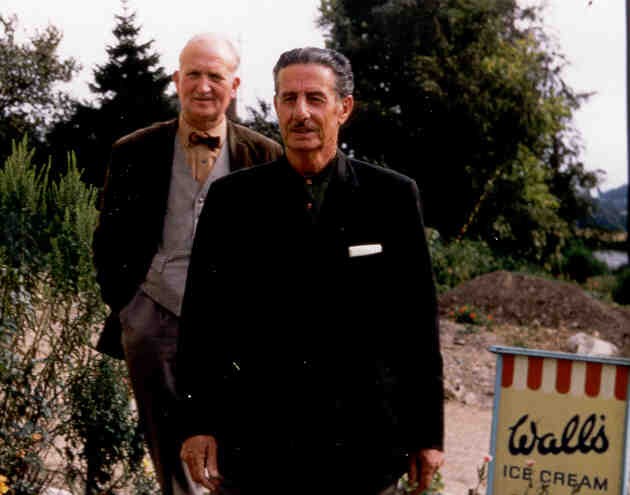
Lambert Wilson and Bert Neale
Chapter Five
1967
I obviously had another life outside the band and the orchestra, and, even though I was part of so many musical activities, I still had time to do some of the normal things that kids did at that age. Living in the country, I had to help out on the local farm, but even these chores didn’t stop me getting up to the usual sorts of mischief with my pals, such as scrumping and birds’ egg collecting.
I also had my friends at school and, like most of my classmates, I was also becoming more interested in girls. Make that very interested.
————-
During the Spring half term I travelled with the orchestra to play in Wisbech (5) and Cambridge (6), (7) on the 13th and 14th of February. The second concert was a rather unusual double program. It consisted of a morning concert – where Nicola Swann played the Haydn Oboe Concerto – and an afternoon concert where Andy Mack repeated his previous day’s performance of the Weber Concertino. The two conductors on this occasion were John Westcombe and Jim Haworth.
Shortly after Easter, on the 30th April, the orchestra gave a concert at St Peter’s Church in Church Langton (8), where Sue Phipps played Robert Valentine’s Flute Concerto, the first performance of this work since the eighteenth century. The Mozart Violin Concerto soloist was Stuart Johnson, and John Adams played the solo cello in the Baumann work. This was a rather special occasion for me for two reasons. Firstly, I had been to junior school in Church Langton just a few yards away from the church and knew the area well. Secondly, because it was local, for the first time my parents had come to the concert to hear us play.
As part of the Leicestershire Schools Music festival, we repeated the concert at Castle Donington Secondary School (8). Just before this I’d been asked to be part of yet another musical organisation – the ‘Area Orchestra’. This consisted of orchestras from schools in the south of Leicestershire. In my view this was an entirely superfluous venture and, although I went along to the rehearsals in Lutterworth, it just took up even more of the precious little free time that I had after school each day.
Back at school, I was getting fed up with having to play in school assemblies. This meant that I had to be separated from my mates, and miss out on the laughs and larking around. It was also embarrassing given the quality of the School Orchestra. But I had also taken quite a fancy to a certain woodwind player, one of the small group of us who went to the County Orchestra from Market Harborough. We used to mess about in the small musical storeroom behind one of the main classrooms. Along with other pupils that were in the School Orchestra, we used to try and play one of the many spare instruments that were lying about on the shelves. My speciality was playing the hornpipe on the tuba as fast as I could.
I was fifteen in May and had never really gone out properly with a girl before, and was waiting for the right opportunity.
The summer school holidays arrived and I couldn’t wait for the day when we would be off on our next orchestra course. This year it was to be held at Southport. The week of rehearsals culminated in a concert at the Holy Trinity Church in Southport on the 1st August (9).
We were based in a large school as usual. There were about a dozen or so of us in each classroom dormitory and we got up to all the usual pranks. One of the favourite ones was to loosen all the legs of someone’s camp bed so that it just stayed up but immediately collapsed as soon as you sat or lay on it. We would also carefully carry people who were fast asleep on their beds outside to spend the night in the open air. What they thought when they woke up I don’t know.
The worst prank that we got up to was when a number of us ‘bounced’ a female member of staff’s car so that it ended up in a playing field adjacent to the car park. That wouldn’t have been so bad except for the final resting position – lengthways between two goalposts with only a few inches to spare at either end. In hindsight this was a wicked thing to do but it seemed hilarious when you were 15 years old.
Half the boys were involved in trying to make new relationships with the opposite sex (and the half that weren’t were wimps in my immature view!). In reality we were a bit too young to get up to anything completely overt, but that didn’t stop us pretending. I flirted with a flute player but didn’t really achieve anything except to chat to her during our daily walk down to the sea front. A whole group of us used to go together, and generally fool around trying to impress our peers – as kids do at that age.
What was especially exciting for a youth of my tender years was that the girls seemed to be in some sort of perpetual contest as to who could wear the shortest mini-skirt. How they got away with some of them I’ll never know, but there were definitely no complaints from me personally.
Eventually, we made our way back from the course and after the bus had dropped most people off at Leicester, we journeyed on to Market Harborough. Somehow or other Miss Woodwind and I got into a ‘staring contest’ (very mature, I don’t think). Anyway, one thing led to another after that and she and I started to spend more time with each other in a kind of unspoken arrangement, although we weren’t really going out together.
As soon as we returned we played a concert at Bushloe High School in Wigston (10). Among other items, Rob Walker from the Senior Orchestra played Weber’s Hungarian Rondo for Bassoon, and Susan Phipps played the Dittersdorf Flute Concerto. Included in the same concert was William Mathias’s Sinfonietta, which was specially commissioned for that year’s Leicester Schools Festival of Music. The festival had been inaugurated in 1965 and the intention was that it would be held every two years.
I returned to school in September as a fourth former. Although this academic would be my ‘O levels’ exam year, I was still playing with the School Orchestra after the end of lessons, with the band on two evenings a week, and with the Area and County Orchestras in the rest of my spare time.
On top of all this, I had joined a jazz group. A few months earlier, a clarinettist in the school orchestra, a boy called Brian Downes, had suggested that a few of us form a small trad jazz group. I agreed, together with a trombone player called Glenn Pollard (my friend from the early days of the town band) and a pianist called Steve Webb. The four of us rehearsed and started to sound reasonably good. Brian supplied all the music and was the real star because he could play jazz very well. My jazz style was pretty awful since I had always learned to play ‘straight’.
But we soon started to get bookings to play at various functions, including local clubs and night-spots. Brian told us that we were to audition for Opportunity Knocks on the following week. So a few days later we went to Nottingham and were one of about two hundred acts taking part. We made the last twenty-five before being knocked out. I felt that what we needed was a drummer, otherwise, as none of us were older than sixteen, I thought we might have made it to the final.
————-
We had only just started Saturday morning rehearsals for the new term when we were asked to give a concert at the Beauchamp Grammar School on the 13th October. Richard Fairhead played the Mozart Piano Concerto Number 9 (10).
A few days later, I had my first call to rehearse with the Senior Orchestra. I didn’t seem to go through any formal promotion process like the other players. One day, during an Intermediate rehearsal, one of the staff said I was wanted in the Longslade Upper School. To this day I don’t know why, I only remember the feeling of terror as, clutching my trumpet case, I made my way along the footpath between the schools.
I arrived at the Upper School and just stood around. Eventually, Steve Lenton spotted me and told me to sit at the end of the trumpet section. I remember Steve was leader, Colin Clague was second and one or two others were in between him and me. I was totally overawed by the whole atmosphere because, unlike the Intermediates, the Senior brass section sat on a stage above the main body of the orchestra, and, as a result, the whole dimension of the orchestra seemed different. Everyone was much older than me and appeared to be very sophisticated and grown-up. Then I noticed that Jimmy Watson was in the trumpet section! I was shocked! Jimmy was the champion cornet player in the UK and must easily have been the greatest youth trumpet player in England. The realization that I would be playing alongside him but never be his equal in ability brought me down to earth with a bump.
I quickly learned a number of facts about being in the Senior Orchestra.
Firstly, the older boys had power and the younger ones didn’t. Younger ones such as myself did as we were told otherwise we were threatened with all sorts of punishments. Funnily enough, these threats rarely seemed to be carried out. So there was no bullying as such; it was more the implicit threat of being bullied that maintained the status quo.
I was always being threatened with the ‘pissoir’. It took me ages to work out that the pissoir was the men’s urinal and the threat meant that if you didn’t behave you would end up getting dunked in it while it was flushing. Fortunately, I managed to avoid this experience but I know of one or two others who weren’t so lucky.
Secondly, virtually every boy smoked cigarettes. You almost had to in order to look cool. So at break time we all cleared off to have crafty fags. I soon got into the swing of this and remembered to buy my ten Conquest cigarettes every Saturday while I was waiting at the bus stop in Market Harborough.
Thirdly, the orchestra took things a bit more seriously than we had done in the Intermediates. The quality of playing and the whole sound of the orchestra was completely different. Because everyone was that much older, there was none of the running around and giggling that was part of the Intermediate set-up.
Another important issue for me was that there was a whole new orchestra of girls to study closely and evaluate individually. While we were counting bars rest it was incumbent on me to methodically check out each female and award them a mental rating (adolescent boys do this, you know). Even though most of the girls were older than I was and therefore unattainable, I was struck immediately by how many attractive girls we had playing in the orchestra.
Although by now I was rehearsing with the Seniors, at the end of October I was among a number of senior players who were asked to go on a course with the Intermediate orchestra. It was to be my first trip outside England – to Ballymena in Northern Ireland. We all looked forward to it tremendously – especially me – because it would finally mark the proper beginning of my relationship with Miss Woodwind.
Altogether there were seventy-eight girls and boys and six staff going on the course. They were (in no particular order):
Linda Coe, Joyce Fraser, Hilary Orton, Ann Smith, Malcolm Bennett, Richard Harris, John Smith, Martin Walker, Veronica Adcock, Valerie Blissett, Kathryn Clewlow, Corinne Bradley, Elizabeth Salem, Richard Errington, Stephen Hopkins, Stephen Hunt, Jonathan Salem, David Stevens, Mary Greenhow, Andrew Barnwell, Helen Parker, Susan Phipps, Kathryn Marcer, Stephen Lenton, David Matthews, Graham Pyatt, Christine Wells, Robert Heard, Peter Lawrence, David Thompson, Helen Barksby, Rosalind Burton, Eleanor Cooke, Vanessa Hood, Vanessa Knapp, Heather Milbank, Jacqueline Spiby, Andrew Mack, David Sharp, Jeffrey Zorko, Kathryn Halsall, Lynn Mace, James Eccles, James Shenton, Lisbeth Ward, Jane Sanders, Clive Aucott, Richard Fairhead, Lorraine Aucott, Sarah Brookman, Julia Shoulder, Anne Sim, Alison Tilsley, Neil Marner, Paul Jarvis, Barbara Allen, Gillian Allen, Barbara Bath, Lynne Faulks, Sheila Smith, Sandra Taylor, John Adams, Barry Belcher, Stephen Draycott, Andrew Smith, David Smith, Diana Birks, Barbara Cooper, Catherine Jinks, Patricia Kelly, Helena Kendall, Elizabeth Mackay, Penelope Roberts, Frances Stedman, Glyn Belcher, Stephen Gee, Charles Jones and me. The six staff were Messrs Hallam, Matson, Robb and Pinkett, Miss Chandler and Miss Yorath.
The bus journey was going to be very special for me. I had finally plucked up the nerve to ask Miss Woodwind if she would sit with me on the bus and I was determined that I’d have my first snog with her. We’d only been travelling a few minutes when I tried the first kiss. She said I was awful. Ah well, I thought, I could only get better and practised all the way to the ferry.
The ferry was a great adventure for me because I’d never even seen one before let alone sailed on one. We duly arrived in Belfast and then travelled on by bus to Ballymena. When we arrived we were all allocated to ‘hosts’ who would look after us for the week. I was disappointed to find that although I’d be staying at a very posh house it would be with a girl (whose name I won’t mention) who was only about thirteen, and another boring wimp-type boy about my own age.
Each day we were taken by our hosts to the local school where we practised or, more often than not, were whisked off by bus to take part in concerts at various local schools.
Whenever we went away on these orchestra courses the staff would organise some sort of sightseeing trip and this time was no exception. We were taken to the Giant’s Causeway and allowed to clamber around on the uniquely shaped stepping stones.
The week consisted of nine concerts:
22nd – Lambeg (11)
23rd – Bushmills Grammar School (schools concert a.m., public p.m.)
24th – Carrickfergus (schools concert a.m., public p.m.)
25th – Magherafelt (schools concert a.m., public p.m.)
26th – Ballymena
27th – Rathcoole
Andy Mack played the clarinet concertos and Richard Fairhead the piano concertos. The program was broadly the same on each occasion.
During the course I was determined to see Miss Woodwind. She was staying with another girl who was friendly with one of my pals. One evening my friend and I met up to walk to the house where they were staying, even though it was some distance away from our own. We managed to spend a couple of hours with them because their hosts were out for the evening. Unfortunately, their hosts discovered our liaison and weren’t impressed. They complained to Eric and he took both Miss W and her friend aside to let them know that he was not amused, and any repetition of their behaviour would result in them being sent home.
Before the course ended I had made a number of new friends. For the first time I met two boys who were to become firm friends for many years to come – Dave Smith and Steve Draycott.
We returned from Ireland and started school again after the half term. Miss Woodwind and I started to go out ‘properly’ and our first date involved going to the cinema together. My parents had allowed me to go and a local lad in our village had a girlfriend who also lived nearby which meant that he could give me a lift home afterwards. I was so excited I don’t remember much about that first date but I think it was reasonably successful as we soon started going to the cinema regularly on a Saturday evening.
————-
By now I was principal cornet with the Market Harborough Town Band. The band still weren’t very good but I stuck at my practice and enjoyed being leader of the band at fifteen. I continued to take part in a number of solo contests with some mixed success.
On the 10th November I played my first concert with the Senior Orchestra at Ivanhoe College in Ashby (12). The soloists for the Oboe and Violin Concertos were Philippa Elloway and David Matthews respectively. It was a thrilling occasion for me and an entirely different matter to the previous Intermediate concerts. It wasn’t just the higher standard of play, but the whole atmosphere seemed more serious and professional. I enjoyed it thoroughly even though I felt that I was only a very small part of the whole enterprise.
————-
I think it’s easy to forget now about other aspects of that era which stick firmly in the mind of those of us who were around in the sixties. It wasn’t just the music, but the social upheaval and sexual freedom that began to emerge at that time. I particularly remember the advent of the contraceptive pill and the excitement for us all at the time of the prospect of sex without the usual encumbrances and worries.
Pop music was all around us as anyone my age will tell you. The clothes were another symbol of the times. Apart from the mini-skirts, flower power and influences from America had contrived to completely change everyone’s wardrobe. My mum had made me an orange flowered shirt with a penny collar, and another in purple silk.
The latter I would proudly wear with my purple corduroy jeans and purple corduroy jacket!
I had crimplene long-sleeved shirts, tie-dye sleeveless ones, cotton ones with black lace-up necks, hipsters instead of trousers, and, most of all, waistcoats. Wearing waistcoats without any coat was somehow significant because waistcoats were originally designed to be worn as part of a suit and I think the symbolism was unmistakable. As well as the minis, girls wore hot-pants, maxis, jeans, smocks, fluffy jumpers and see-through tops. Unfortunately, they also wore tights.
————-
The orchestral diary for 1967 drew to a close with extra rehearsals at Birstall during the Christmas holidays.
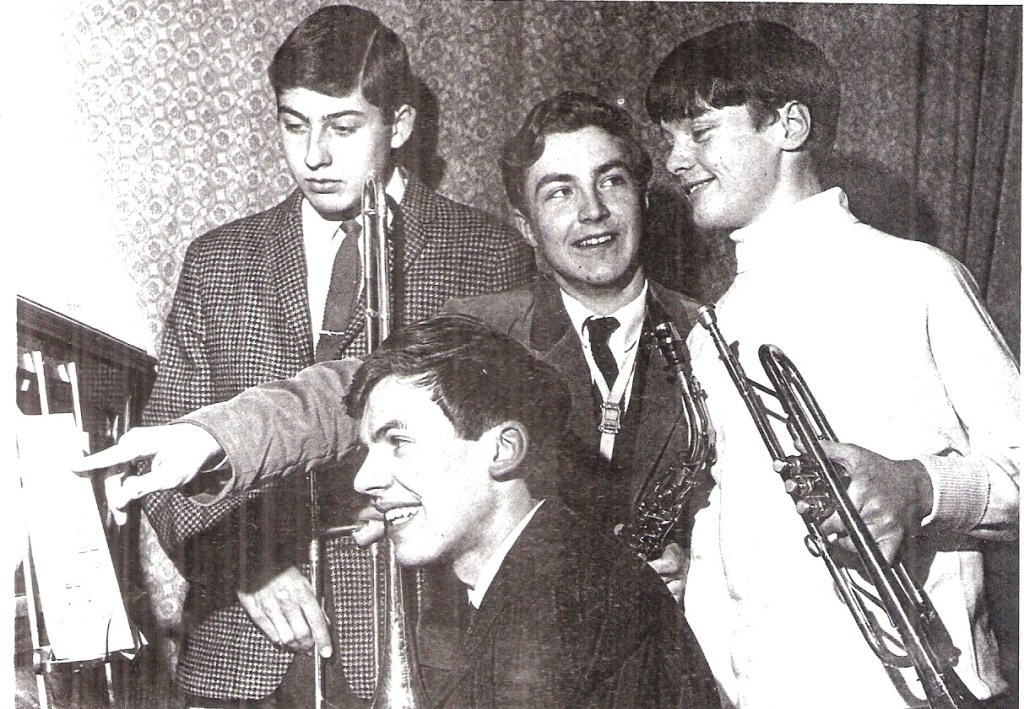
THE BRIANDROS COMBO
(Glenn Pollard, Brian Downes, Yours Truly, and Steve Webb seated)
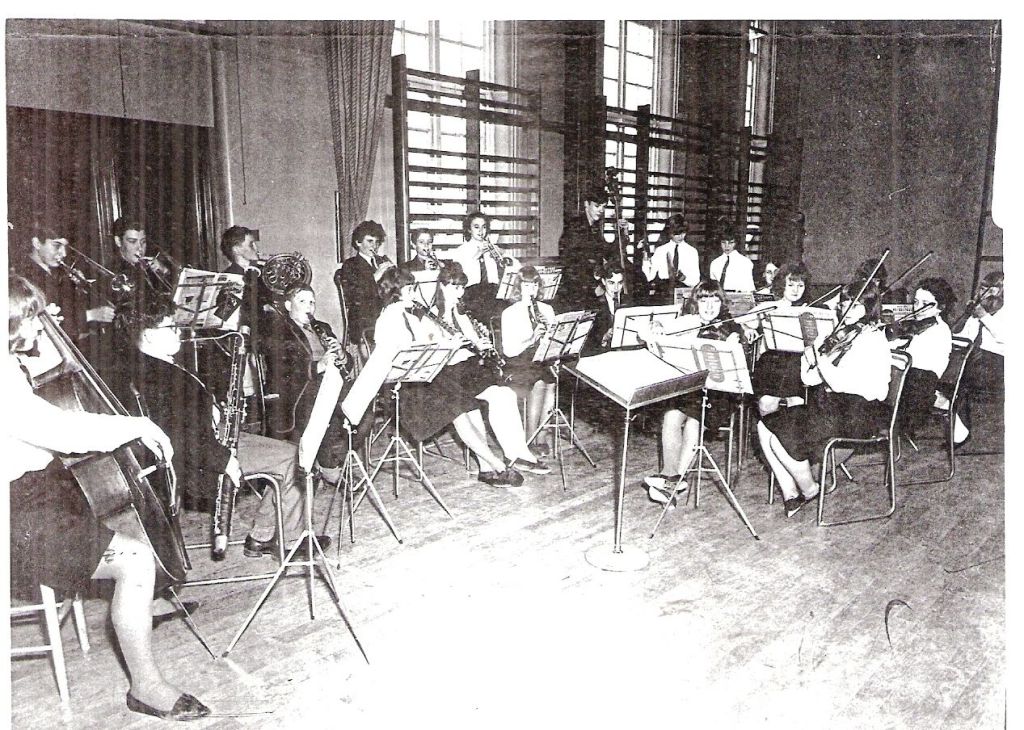
THE SCHOOL ORCHESTRA
(Glenn Pollard, Len Tyler, Ian Hardcastle, Geoff French and mini-me next Diane Henderson)
and other non-brass players whose names I don’t remember (sorry)!


1968
From late 1967 to early 1968 I was often involved with both the Intermediates and Senior Orchestras. A number of us who had recently moved to the Seniors were sometimes brought back for engagements with the Intermediates while our replacements were gaining experience.
I think Eric Pinkett began to formally acknowledge me as a player at about this time. Obviously I’d been aware of Eric from my early days in the Intermediates when someone had pointed him out to me. But I’d never been in an orchestra that had been conducted by him before and, until someone pointed it out to me, I didn’t quite understand that he was the driving force behind the whole organisation. It was remarkable that he managed to make time for so many young musicians and understand their strengths and capabilities. If one thinks about the hundreds of children who passed through the various orchestras over the years, it would have been hard enough to remember their faces let alone their relative ability.
On January 2nd I was with the Seniors when we were filmed during rehearsal by the BBC as part of the Music International program to be shown on BBC2. This was an exciting new venture for me. We were at Birstall as usual but the main hall was packed with huge lights and cameras. We had to play naturally and pretend to ignore the intrusion of all the equipment. I’m sure we all looked far more serious than we usually did. Eric had to have make-up applied to his shiny head and we all attempted to brush our hair and look our best, knowing that our parents and friends would eventually be seeing us on TV. The film crew recorded us playing Nimrod, Candide and Tippett’s Suite in D conducted by Sir Michael.
The spring term began. Occasionally we would give a concert during term-time and one of these took place in the half-term in the Temple Speech Room at Rugby School on the 27th February (13). Dave Matthews played the Bruch Violin Concerto, but the concert was more memorable for our first public attempt to play the fiendishly difficult Walton Partita. Perhaps even more importantly Norman Del Mar was in the audience to listen to us – no doubt with the summer’s Vienna tour in mind.
I still hadn’t entirely lost touch with the Intermediate Orchestra and helped them out at their next concert on the 10th of April at Stamford (14).
I used to love going to rehearsals in those days. It was such a marvellous hobby as well as tremendous fun. The combination of music, girls, larking around and practical jokes was a heady mixture. Every Saturday, I would catch up with my friends, male and female, and swap news. There would be new music to learn and, occasionally, new faces arriving. There was excitement when Eric announced the next new project, particularly if the news involved a TV session, a recording, or a course away from home. My schoolwork suffered because everything else seemed to pale by comparison to my involvement in the orchestra.
The players at about this time were:
First Violin Cello Bassoon
David Matthews Kim Punshon Robert Walker
Andrea Sharpe Anthony Lewis Maurice Turlington
Judith Allen Julie Houlton David Smith
Julia Shoulder Fiona Torrance Stephen Pepper
Stephen Whetstone Ian Heard
Michael Savidge Graham Stevenson Contra-Bassoon
Mary Turner Vivienne Shorthouse Maurice Turlington
Carol Leader John Adams
Robert Heard Barbara Bath Horn
Vida Schepens Diana Birks Thomas Lewis
Marion Davis Lyn Eyre David Thompson
Margaret Smith Christine Posnett David Stevens
Margaret Sharpe Sandra Roberts Catherine Wortley
Anne Jameson Julia Mobbs Dianne Phillips
Heather Walker Elizabeth Marlow
Susan Aiers Elizabeth Salem Trumpet
Anne Webster Stephen Lenton
Alison Tilsley Double Bass James Watson
Sybil Olive John Smith David Hoffler
David Vercoe Trevor Nurse Philip Monk
Eleanor Cooke Ruth Hopkinson
Kathryn Clewlow Elaine Harrison Trombone
Linda Brice Pamela Maddock Roger Harvey
Paula Marlow John Turner
Second Violin Hilary Orton Martin Slipp
Richard Anderson Lynda Coe John Davis
Elizabeth Deans David Sharp
Jane Hyman Piccolo Richard Fairhead
Kathryn Hopper Sheila Angrave
Robert Grewcock Tuba
David Abbott Flute John Smith
John Whitmore Ruth Webb
Janet Crawshaw Sheila Angrave Timpani
Rosemary Carr Hilary Ball Andrew Smith
Clive Aucott Susan Phipps
James Shenton
Paul Jarvis
Second Violin Oboe Percussion
Judith Proctor Philippa Elloway Margaret Whiteley
Lynn Mace Kathryn Vernon Stephen Whittaker
Stephen Gee Karen Griffiths Wendy Wilson
Anne Wright Nicola Swann Celia Mulgan
Ruth Storer
Viola Elizabeth Mackay Harp
Moira Watkinson Pamela Wright
Helen Leech Cor Anglais
Susan Taylor Nicola Swann Piano
Alice Freshwater Richard Fairhead
Ian Anderson Clarinet
Rona Eastwood David Pugsley
Malcolm Dicks Rosalind Lenton
Graham Parker Robert Oldham
Toni Smith Susan Underwood
Lynne Faulks Andrew Mack
Kathryn Marcer Jane Monk
Benedict Mason Valerie Blissett
Glyn Belcher
Stephen Draycott
The Easter course this year was to be held in Chippenham. This was my first taste of being on a course with the Seniors. Miss Woodwind and I had moved up to the Senior Orchestra at about the same time and I knew we would be able to develop our friendship while we were away.
The course was an altogether different affair from my previous Intermediate courses. I had previously realised that several of the senior boys formed a close circle that was tacitly acknowledged as the ‘in-crowd’. A sense of adventure, general bad behaviour and pseudo-adult pastimes marked them out from the boys who tended to behave themselves. Some of the in-crowd names that spring to mind were Ian Heard, Dave Pugsley, Robert Walker, John Smith, Dave Mathews, Andy Smith, Jimmy Watson, and Tony Lewis. There were no doubt others whom I may have omitted but there were no absolute criteria and some were more ’in’ than others were. I decided from the start that although the in-crowd boys were older than I was, I was going to try my best to try and hang around with them.
I managed to get a space in the corner of the ‘in-crowd’ dorm. This was an exceptionally daring thing for me to do because I was definitely not ‘in’. You had to be accepted into the group before you stay in their dorm and there was no way that I had been accepted or even hardly acknowledged. One or two of the others questioned my right to be there but I managed to hold out by claiming that the other dorms were full.
I quickly got used to the most important aspect of any course – the drinking. We all went out each night and knocked back as much beer as possible with the objective of becoming completely drunk. How we managed to get served at that age I don’t know. We would make our way back from the pub in a completely inebriated state, falling over, being sick, doing utterly stupid things, or a combination of all three.
During our drinking trips in the pub we became aware of some of the local yobbos and we heard that they didn’t like us and were spoiling for a fight. One night some of ‘our girls’ were insulted by some of these local youths and, worse still, they had actually hit some of the junior boys. We were incensed and from somewhere (and I’ll never know how) we armed ourselves with baseball bats, cricket stumps, and assorted weapons and went charging off around the playing fields determined to remove the threat. Thank God we didn’t find them or we would have been in serious trouble.
On the third night we had a seance. Apparently, this was quite a regular feature of a Senior Orchestra course. About half a dozen of us sat around a table and each had a finger on an upturned drinking glass. We used to turn all the lights out and ask questions and the glass used to move in response. I was never quite sure whether someone was doing this deliberately or not. I remember once the glass spelled out to us that John Smith’s tuba had been moved from one side of the rehearsal hall to the other and we all dashed downstairs to see if this was true. It was! John swore that it he’d left it on the opposite side of the hall. Of course, I never knew whether someone was taking the mickey and, if so, how many of them were in on it. The majority seemed to believe it and it seemed to work regardless of who comprised the group. Mind you, we had at least as many failures as successes – giggling often spoiling the supposedly occult atmosphere.
The one thing I can’t explain is the ‘dead boy’ ceremony. This involved someone laying with their eyes closed on a table in the semi-dark. Six of us stood round the table and each put one finger under the boy, one at each shoulder, one either side of the hips and one at each calf. We would then chant…’he looks dead’…pause…’he feels dead’….pause…’he is dead’. We all then tried to lift him up. The first time we did it I was totally shocked and amazed. I was one of those who had a finger underneath the boy; he seemed to weigh nothing and shot up about four feet into the air. There were gasps from everybody and we had to lower him quickly back to the table.
I couldn’t explain it. There didn’t seem to be any weight to him at all; how could that be? Why didn’t he fold up in the middle? He stayed as straight as an ironing board.
We repeated the experiment many times on other nights and other courses. It didn’t always work; sometimes someone got the giggles or didn’t lift properly. But, inexplicably, it often did.
I had realised before the course that one of the days that we were away coincided with an important contest for the band. After much discussion, the band agreed with me that I should go on the course and that they would come and fetch me on the Saturday to take part in the contest and bring me back afterwards. When the day came a chap called Geoff Orange picked me up in his car and brought me all the way back from Chippenham to Market Harborough. I got changed and we all went off in the band bus to Lutterworth where the contest was being held.
When we arrived there didn’t seem to be much activity. Geoff got out of the bus and asked the first person he met if this was the correct venue. The person replied that it was. When Geoff asked if he knew about the brass band contest, the person said yes – it was due to take place on the following Saturday!
The band were stunned. What a farce. Geoff had got the dates wrong and we had come all that way for nothing. But it was much worse for me since I had come all the way back from Chippenham. Geoff had to take me back afterwards and I had to answer numerous questions from everyone about how had we got on. It was so embarrassing to have to explain everything.
During these courses the girls had their own way of fooling around (so I’m told). This often involved raids on the school canteen and subsequent midnight feasts by torchlight. On one occasion they stuffed pillows under blankets to cover the absence of a certain oboe player as she disappeared for a late night tryst with a clarinettist. On another they took someone who was fast asleep out of the dorm in their sleeping bag to spend a night in the corridor. Although the staff were supposed to take a tough line over such behaviour, nobody seemed to get into serious trouble although the teachers must have known what was going on.
The teachers associated with the Senior Orchestra were somewhat different to those involved with the Intermediates. Apart from Eric and Jack Smith, there were a variety of others called in to help, organise and control us all. One of the favourites who we would take the mickey out of was Johnny Westcombe. Mr Westcombe always tried to look cool. He was famous for wearing his shirt or jacket collar up thinking that it was trendy. One day about twenty of us walked into rehearsal all with our collars up. I couldn’t play for laughing when I saw the expression on his face.
Generally though, the teachers (including Mr Westcombe!) were great. They helped us enormously and most of them were willing to share the laughter and enjoy themselves. They would often bring their golf clubs with them on these residential courses and take the opportunity to have a game if time allowed.
During the course I was surprised to notice that not only did we have Jack Smith as an organiser and the other musical teaching staff, but we also had a teacher to repair and maintain instruments (often by commandeering the school woodwork room). Jack himself had a particular affinity with many of us. He always seemed to be at the centre of everything as someone we could talk to if we had a problem and who would take care of all the administrative details. He became a permanent feature of every course and must have put an enormous amount of effort into organising matters behind the scenes.
I think the main reason that we respected the staff was that they used to have to put up with the same awful food and conditions that we did. But it didn’t end there. Even guest conductors often had to share dorms with the teaching staff (although they were sometimes fussed over by some of the girls who would bring them breakfast in bed).
One day I walked into the main hall to find a dozen or so players sitting on the stage and singing a Beach Boys hit, acapella-style. I was knocked out at the great sound that they managed to produce based on their natural grasp of harmony and range of voices. I would have loved to have been old enough to join in. It was only at this point that I realised that so many of our players were such talented singers.
Back to the music. Sir Michael Tippett conducted the Ritual Dances from his opera ‘A Midsummer Marriage’ for a new film called ‘Music!’. (A few weeks later, on May 25th, a BBC sound crew came to our Saturday morning rehearsal at Longslade to record the sound track to go with this film). Normal Del Mar also came to conduct us during the course, along with two specialist tutors – Trevor Williams (Leader, BBC Symphony Orchestra), and Ambrose Gaultlett (Cello professor at the Royal Academy of Music).
A short comment on Michael Tippett: Sir Michael first became involved with the CSM in 1965 when he agreed to take part in the Schools Festival and conduct two major concerts at the De Montfort Hall. The logistical problems in actually rehearsing the LSSO for the festival were largely overcome by the orchestra travelling down to Corsham, close to Sir Michael’s home, and taking up residence in a local school for a full week during the Easter holidays.
This enabled Sir Michael to work with the orchestra after his usual days’ schedule. In this way his routine was not disrupted, but perhaps more importantly, from an LSSO perspective, there was substantial rehearsal time for the players and Sir Michael to get to know each other and improve the overall standard of performance.
After a very successful and eventful experience for me we returned home after the Easter break in time for the start of the summer term.
————-
The following month it was my sixteenth birthday and my Dad bought me a small motorbike. This was a marvellous present for me because it gave me new freedom to travel and allowed me to see Miss Woodwind when I wanted to. Once I’d got the hang of riding it I even dared to go to one or two Saturday morning orchestra rehearsals on it.
————-
On May 1st the Senior Orchestra gave a concert in the De Montfort Hall in Leicester (15). Eric had previously decided that we should form an association with an outstanding young English pianist called Nicola Gebolys. She was the soloist on this occasion and joined us in many more performances on our tours abroad.
————-
On the 5th and 6th of June, the Grammar School put on a play called Noye’s Flood. I had to take part, as did most of the School Orchestra. I thought it was embarrassing because playing in the School Orchestra didn’t compare well with playing for the LSSO. How awful to think that I had become such an elitist musical snob at such a tender age.
————-
I was still playing almost every week in the jazz group. I remember one particular occasion when Brian had booked us to play at Lutterworth Working Mens Club (Broadway here we come!). We waited behind the curtain to be introduced to the audience, and the compere turned round and said:
‘Right, lads, on you go. What was the name again?’
‘The Briandros Combo’ replied Brian. Glenn and I exchanged our usual look of exasperation.
‘The what?’, said the compere.
‘The Briandros Combo’, repeated Brian.
‘The Brian what?’ said the compere.
‘The Briandros Combo’, said Brian
The curtains flew open; the compere stepped forward and said:
‘Welcome to four special youngsters, here to play jazz for you this evening. Give a big hand for…. The Tigers!’
————-
Two weeks later I had to go through the annual embarrassing ritual of playing in the Market Harborough carnival procession. It was a terrible ordeal for me as my schoolmates would be there and severely take the mickey because of the uniform and the fact that I was marching. I always wore dark glasses to try and disguise myself but they still spotted me and shouted insults from the pavement while doing impressions of marching German soldiers. Mind you, it didn’t help when one of our trombone players dropped his music. By the time he had run back to retrieve it, it had been run over by the Carnival Queen lorry.
About this time Miss Woodwind and I were going through a bad patch. This was entirely my fault through being immature and stupid (a habit I haven’t entirely grown out of), and we soon broke up. I knew she would be going away to college after the summer holidays and it would have been difficult to maintain our relationship anyway. But it still didn’t excuse the fact that I’d behaved badly.
One of the things that didn’t help was the appearance at one Saturday morning rehearsal of a new double-base player. I don’t know what the other boys thought but she seemed to me to be the most gorgeous thing I’d ever seen – great figure, pretty, long blonde hair, the works. My eyes were on stalks. Her name was Trudy. A few weeks later a rumour circulated to Miss Woodwind that I was going out with her (probably because I never stopped gawping at her). It wasn’t true (I should have been so lucky), but it didn’t help matters.
On 28th June the School Orchestra felt brave enough to play a concert in their own right at the Grammar School. This sort of thing always amazed me. I couldn’t understand how anyone in his or her right mind could stand to listen to such an awful row, let alone pay for it (there’s that musical snobbery again).
The Senior Orchestra continued to rehearse every Saturday and Sir Michael Tippett came up to take us through our paces before our next London concert. We had mixed feelings about Michael’s conducting. While we respected his musicianship, his conducting didn’t seem altogether with it. This may have been partly due to his age and to the fact that his eyesight wasn’t all that good (he suffered from cataracts for some years). Unfortunately, this meant that he often couldn’t quite make out where each section was. He’d therefore cue the trumpets and look for us in the wrong area of the orchestra, which was a bit disconcerting (no pun intended).
Eventually, on July 13th this rehearsal activity culminated in an important concert at the Guildhall as part of the City of London Festival (16). Sir Michael Tippett conducted the whole of the program apart from Walton’s Partita – for which Eric took the baton.
The Intermediate Orchestra’s course this year was at Cromer from July 19th – 27th. Although I was in the Senior Orchestra, a few of us were brought back from time to time to reinforce some of the Intermediate sections and, when asked, I willingly volunteered.
During the course I met a very young violin player called Maureen. Although she was much younger than I was (thirteen) she looked very grown up (so I thought) and had a figure to match. We soon began spending a lot of our time together. Our favourite pastime was sitting on the pier and putting money into the jukebox so that it would play ‘Young Girl’ by Gary Puckett and the Union Gap over and over again. We would then discuss endlessly the difference between our ages, because I was so ‘old’.
We got up to the usual antics in the dorms at night. One night the boys in the most senior dorm (me, Ian, Steve, etc.) decided to raid one of the more junior dorms next door. Unfortunately, the occupants of this room got wind of this and when we tried to get in after lights out the door was firmly jammed shut. There then followed two hours of every conceivable assault on the door to their room. We tried kicking it, charging it with a bench, picking the lock, and putting lighted matches through the keyhole. I’ll never forget the final scene when Eric, alerted by the commotion, walked up the stairs in his dressing gown, took one look at the situation and shouted,
‘Who’s the instigator of all this?
I knew it couldn’t have been me because I didn’t know what an instigator was.
The teachers really did have to put up with a great deal of outrageous behaviour. They were remarkably tolerant all things considered.
During the course we gave a concert in the Church of St. Mary the Virgin, Happisburgh (17), with Sybil Olive playing the Beethoven Romance in F for Violin. The course ended and we gave the usual concert on our return at Bushloe High School repeating the Happisburgh program.
The new term began, and, back with the Senior Orchestra, I took part in a concert in Leicester Cathedral on the 13th September. We attempted to play Semiramide but the daunting opening for the horn section proved too much for us. After the concert Del Mar took the decision to withdraw this item from the forthcoming summer tour even though the programs had already been printed. (Instead, a printed flyer was inserted into the tour programs claiming that a key horn player had been taken ill!).
The following week we embarked on a major tour to Austria. We preceded this by stopping in London to record Candide for the programme ‘How It Is’ for the BBC. We were squeezed into a very cramped studio and were astonished to discover that it was the same one used by the BBC for ‘Top of the Pops’ because it looked much bigger on the TV.
We gave our final pre-tour concert on the 20th of September at the Fairfield Halls in Croydon, (18), spent the night in Dover and departed for Austria the next morning.
By now, like most of my friends, I was very fussy about which bus I was going to travel on. There were a number of factors to take into consideration:
1) there was usually an ‘in-crowd’ bus. This was the bus to be seen in if you were cool. Wimps were discouraged.
2) you didn’t want to sit in a bus with important members of staff such as Eric if possible. Such teachers restricted one’s ability to fool around.
3) the further towards the back of the bus, the cooler you were.
4) the ‘in-crowd’ bus was going to do all the dirty singing. This was a new phenomenon to me but one that I quickly got into the spirit of. We had our own versions of rugby songs that would make a prostitute blush. We would make them as rude as we could get away with. I used to particularly enjoy seeing girls and ‘shy’ boys cringe with embarrassment when we went too far.
If you were there you’ll certainly remember the old favourites – ‘All the nice girls love a …….’; ‘She came from Glamorgan with…..’; etc, etc.’
On all these trips Robinsons of Hinckley supplied the buses. We got to know the bus drivers as well as we knew the staff – in fact sometimes better. We all tried to get ‘in’ with them because we knew they could get items for us that weren’t always available. Sometimes they were able to buy beer or fags on our behalf if it was otherwise difficult; on other occasions they could be persuaded to take us out on the bus for a night’s bar-hopping. When we were abroad they even managed to get one or two of us into night clubs (even strip joints!).
During the journey we lived on fruit pies, crisps and apples. I guess this was because they were very compact to carry and had a reasonable shelf life. Once, when we were loading up some of these items in boxes at St. Margarets a dog came by and peed on one of the boxes of apples. The boys who witnessed this immediately swapped it with the one due to be loaded onto the bus behind.
Whenever we went on these tours there were usually three buses to take all the staff, players and instruments. In the early days, the back few rows of seats in Bill’s bus were removed to make space for all the instruments and stands. Eventually, even this space wasn’t sufficient and we included a separate instrument ‘van’ (in practice, a large lorry) in the convoy. After each concert we were all supposed to chip in and help pack all the instruments away in the van. There never seemed to be an end to the amount of percussion equipment of the most awkward shapes and sizes that had to be manhandled from van to stage and vice versa; it was a right pain in the backside. I always had to wrestle with my conscience about whether to give a hand with all this stuff or not. Sometimes, I’d do it because I felt guilty, sometimes I wouldn’t because it wasn’t very cool to be seen lugging these things around.
As the bus travelled through Germany I heard our resident barber’s shop quartet for the first time. This consisted of four lads from the trombone and bassoon section – Roger Harvey, John Turner, Martin Slipp and Maurice Turlington singing in what to me seemed like perfect four-part harmony. I was astonished at how good they were and couldn’t understand how they had learned to sing like that. Their best song was an arrangement of ‘I remember you’.
The Austria concert schedule was:
25th September – Linz (Diesterweghalle) (19)
26th September – Eisenstadt (Haydnsaal) (20)
27th September – Leoben (Kammersaal Donawitz)
28th September – Graz (Stepheniensaal) (21)
30th September – Vienna (Grosser Sendesaal) (22)
1st October – Vienna (Musikvereinsaal)
2nd October – Salzberg (Grober Saal des Mozarteums) (23)
3rd October – Munich (Hochschule fuer Musik) (24)
We maintained pretty much the same program throughout the tour, and were fortunate in having Norman Del Mar with us as guest conductor and Nichola Gebolys as pianist.
On the way there, we had an interesting night in Frankfurt. About thirty of us had gone out to get smashed and had had a great evening drinking. We walked back over one of the many bridges that crossed the Rhine to return to our hostel. But when we arrived it was locked shut (not surprising as it was well past midnight). We knocked on the door and demanded quietly to be let in but no-one could hear us. Eventually, after a long wait, someone in a nightshirt turned up to open the door and let us in. He made sure that we understood that this was completely out of order. What made it worse was that Mr. Westcombe, much to his embarrassment, was with the group and was supposed to be responsible for us.
The next day we heard that Lambert (one of the staff string teachers) had left his suitcase on the dock in Dover. We were constantly reminded of this when we saw him walking around in the same clothes for the duration of the tour.
We soon had a bit of trouble with the accommodation. We were due to stay in a hotel en route to our first scheduled concert venue in Linz. But, apparently, the hotel proprietors had been forewarned of our loutish behaviour in Frankfurt and refused to put us up. So instead we had to stay outside the city in a youth hostel in a place called Passau.
We disembarked from the bus to find that the hostel was a converted castle about halfway up a mountain. It was a dead ringer for Colditz. Worse, there was no easy access for the buses, and we ended up lugging our cases all the way up the side of the mountain. The conditions were awful, with huge dormitories and long communal troughs for washing in. It was freezing cold to boot. The harshness of our surroundings became a topic for discussion that alternated between disgust and humour, especially when we discovered that a bar existed in the dungeon – complete with cobwebs and dead insects.
We gave our first concert in Linz and then followed the familiar routine of travelling between cities – in this case, Eisenstadt, Leoben, Graz – unpacking everything, rehearsing, giving concerts and moving on. The concerts received great critical acclaim in the local press and one or two were broadcast simultaneously on Austrian radio. I think we were mostly aware of the praise in a vague sort of way but became a bit blasé about it after a while.
The repertoire on this trip comprised a number of pieces that we’d rehearsed regularly together, with the addition of one or two newer works. In my somewhat limited judgement, Nichola Gebolys seemed to be excellent as the soloist in the Franck concerto. I enjoyed playing a number of the ‘English’ works particularly Brigg Fair and the Enigma Variations. Mind you, I was still heavily influenced by how interesting or challenging my own part was in each work, rather than the overall merit of the piece as a whole.
Halfway through the tour we arrived in Vienna. Each player was assigned a ‘host’. For some reason Jimmy Watson, Johnny Whitmore, and I ended up without hosts and were billeted in the local youth hostel.
To make up for not having any families to stay with, the three of us were invited to lunch at the British Consulate by a lady called Mrs Hawkins. I’m not sure why, but someone decided that this kindness merited the purchase of some flowers. Much to my embarrassment I was assigned to carry these and, in due course, I boarded a tram to take us to the event. This was fine until I realised that Jimmy and John had boarded a tram going in the opposite direction and all I could see of them was their raised two-fingered gestures as we passed each other going in opposite directions. I got off at the next stop, and, by some miracle we found each other again.
Anyway, we eventually arrived at the Hawkins residence and huge gates were opened after we had announced ourselves via the intercom. An excellent lunch ensued accompanied by copious amounts of beer. After the lunch was completed Jimmy announced that he wasn’t feeling well and made his own way back to the hostel. John and I went off drinking.
John and I arrived back at the hostel in the small hours and, as you would expect, it was locked. We tried knocking on the door but without success. After some inebriated discussion we deduced that the only way we were going to get in was around the back and through the ground floor windows.
We made our way around the side of the building but were dismayed to find that the gardens of private houses went all the way to the back of the hostel windows. It was obvious that we were going to have to go through a number of these gardens to get there. So over the fences we went getting dirty and scratched by thorns while continuously ‘shushing’ each other.
What I did find a little disconcerting was that we had been issued with a street map of Vienna and expected to find our way around. Some of our friends had hosts to look after them, but those of us at the hostel seemed to have been left to work out for ourselves how to get from one place to another.
While we were in Vienna we played a memorable concert at the Musikvereinsaal. This was a huge honour for us. We were the first amateur orchestra in history to be allowed to play at this illustrious venue – it being the home of the Vienna Philharmonic Orchestra. Of all the great occasions in the history of the LSSO, this must arguably have been the pinnacle of success for us and, more especially, for Eric. He must have been incredibly proud of this landmark achievement.
Between Austrian towns we obviously had to make long bus journeys. At lunch time large hampers used to appear from somewhere and packed lunches used to be passed around. These were always awful, and invariably consisted of salami or meat of a similar consistency. We would usually throw them out of the bus windows onto the autobahn.
We hated the routine with the suitcases. We were forever loading and unloading the cases on and off the buses, and then heaving them along lengthy corridors into some temporary accommodation or other. You often lost track of which bus your own case was on, and when you wanted it in a hurry (to get in the best dorm) it inevitably came off the bus last.
Each time we stopped in a town or city we tried to have as much fun as possible in the spare time that we were allowed. Unfortunately, this was a particularly gruelling tour with limited free time for relaxation between venues and concerts. We moved on to Salzburg and another round of unpacking, playing our concert, and travelling onwards.
Our last concert was to be in Munich. We had already heard that the famous beer festival was taking place at around this time and were determined to visit the Bier Kellers. To our initial dismay, Eric had left John Westcombe in charge of us (a thankless task I might add!) and he refused to let us visit the festival. Well, the only way he could have stopped us attending a beer festival was to put us in chains. Initially we took to singing rude songs about him (only, because we were the LSSO, we did it in four-part harmony). When that didn’t work we just ignored him and went anyway. We soon found a basement cellar with the long tables and foaming beers, and had joined in with the oompah band in no time at all.
The concert itself, conducted by Del Mar, was truly memorable. Because this would be the last tour and concert for many players, an encore was inevitable. We wanted Eric to take us through this and he duly appeared to conduct selected Enigma variations with a good many of the senior players in tears for the whole of Nimrod.
We eventually arrived back in England. Most of us were exhausted by the timetable, the travelling, the late nights and the drinking and slept for most of the journey back.
I often wonder when the Senior Orchestra reached its peak. I guess only Eric could judge that having been there from the beginning. Perhaps it was at its best in the fifties; perhaps it’s better than ever today.
But I like to think that it has never been better than it was in 1968. I’ve tried to be objective about it but, coincidentally, we had somehow brought together great players in every section at the same time and it showed. Every section had a terrific player as leader, all capable of playing the major instrumental concerti in the orchestral repertoire. The sense of ensemble was amazing and, in those few moments when, by some chance, I was listening from outside the orchestra, it appeared to me to be indistinguishable from a professional orchestra. Of course, in reality, it wasn’t up to that standard, but I absolutely refuse to believe that there was any better youth orchestra in the country.
Certainly, if one reads Eric’s book, it’s transparent that he believed that this was the greatest tour of all, not just in terms of the quality of our playing, but also the prestige of the venues and the critical acclaim.
As usual, the end of the summer tour and the start of the new term meant that several senior players would now leave the orchestra and go on to colleges or careers in the commercial world. Some of these individuals were outstanding musicians but, as always, we had new talent coming through to take their places.
And so the orchestra was transformed, and a new era began.
————-
We continued to rehearse every Saturday. Each week, Maureen and her friend, Penny Wiseman, would come up from the Intermediates at break times and we would meet and chat about anything and everything. Maureen and I wrote to each other frequently over the next few months and I even visited her once or twice but it was difficult to sustain the relationship when she lived in Hinckley and I in Market Harborough.
I continued to be busy with the band. It was still important to me because the pieces themselves were so demanding and I enjoyed the sound as well as meeting old friends at the contests and concerts. It paled into insignificance compared to my involvement with the orchestra but I realised that it was still the best way to keep me in practice and maintain my standard of play.
On the 24th November, the Senior Orchestra did something unusual in that we travelled all the way to Worcester and back in one day to give a concert at the Worcester College of Education.
We usually held a mini-course at Birstall during the Christmas holidays and this year was no exception. This proved to be valuable rehearsal time for us as we could concentrate a great deal of work into two or three days as well as practice in our own specialist ensemble groups. This small ensemble type of rehearsal was more common in the string sections, but whenever this took place it allowed the woodwind and brass to rehearse together as a military band in the room behind the stage. I used to especially look forward to these occasions because we had so much more to play when performing Sousa marches, and other similar items from the repertoire.
For some strange reason we had been asked to give a concert in Southport on the 14th February (I ask you, Southport in February?). After 30 minutes travelling in the buses, the whole show was called off when it started snowing heavily. But there’s always a silver lining. John Whitmore and Robert Grewcock’s parents had decided to travel independently to the venue. No parents meant an impromptu party at John’s house with our host attempting to play the drunken version of the Liszt piano sonata.
————-
We had been greatly assisted a few years earlier by the creation of the Friends of the County School of music. This organisation had been specifically formed to help us with our organisation, funding, transport, and so on. It contributed hugely to our success and, among other things, allowed us to purchase a number of instruments which would have otherwise proved to be beyond our means. Many of us will remember the sterling efforts of Mr and Mrs Mobbs who ran the organisation so enthusiastically for so many years.
By this time the Friends had already raised money to enable us to purchase our first set of tubular bells, and on the 21st December invited parents along to see us at work in rehearsals as well as running the inevitable Bring and Buy stall with coffee and biscuits.
We had a number of different conductors at the helm over the years. Apart from the guest conductors, you could expect any one of half a dozen staff to take the orchestra for a particular piece or rehearsal. Often this was because Eric was busy or, more probably, he wanted to expose us to different conductors and the variety of style and interpretation that they would bring to the music.
Whether it was John Westcombe or a guest, one could usually tell pretty quickly how competent they were or what they could add to the work. Obviously personality played a big part and a sense of humour was essential if they were to win us over. It also helped if they knew when to cue us from the score or to notice if we made mistakes. What we didn’t like was any sort of ambiguity when bringing us in at the start of the piece or a beat that wasn’t clear. The conductor’s performance was particularly important if the work featured a soloist – usually someone performing a flute or a violin concerto. On these occasions they had to get the balance right between the performer and the orchestra, adjusting pace and volume as appropriate.
Eric was a reasonable conductor and we knew and trusted him. But, of course, he was so much more than that. He would stand in front of us and tell us about the tours, the rehearsals and any other of the other things that we needed to know. He would chide us if we deserved it and praise us if we were worthy of it. In truth, he was our guiding spirit, we were his orchestra, and everything we had become was down to his vision all those years ago. I’m sure he must have been immensely
proud of his creation.
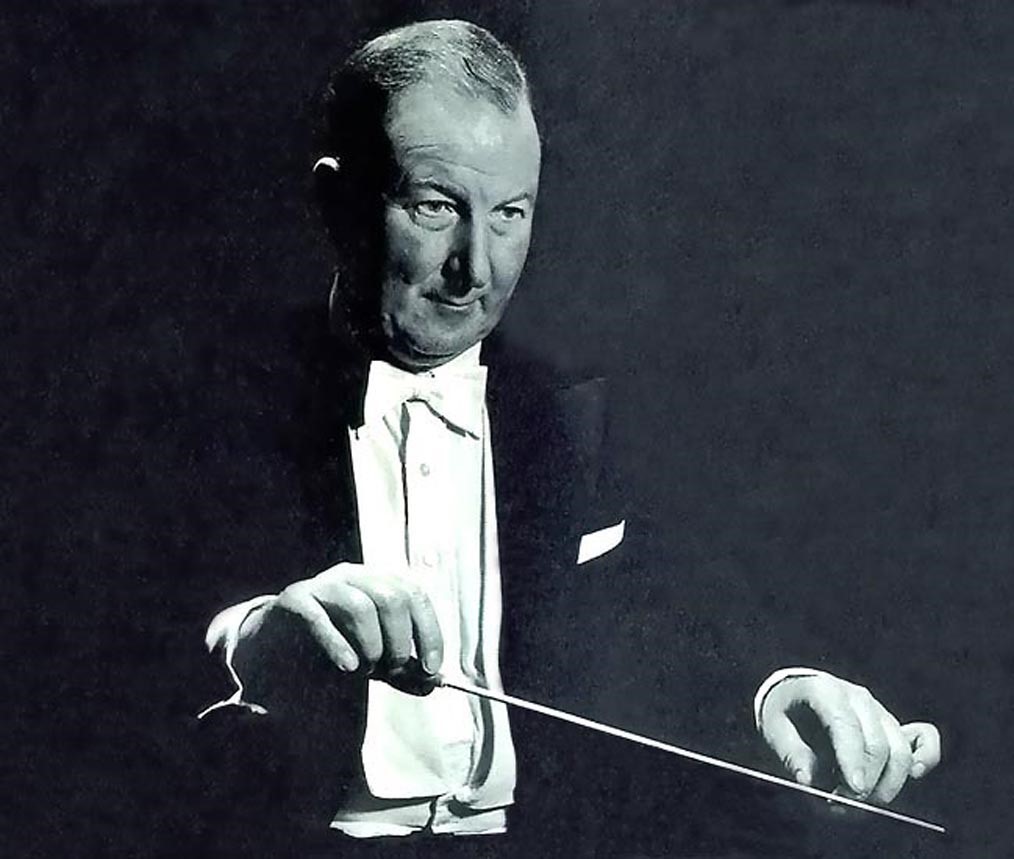
Eric Pinkett in 1966
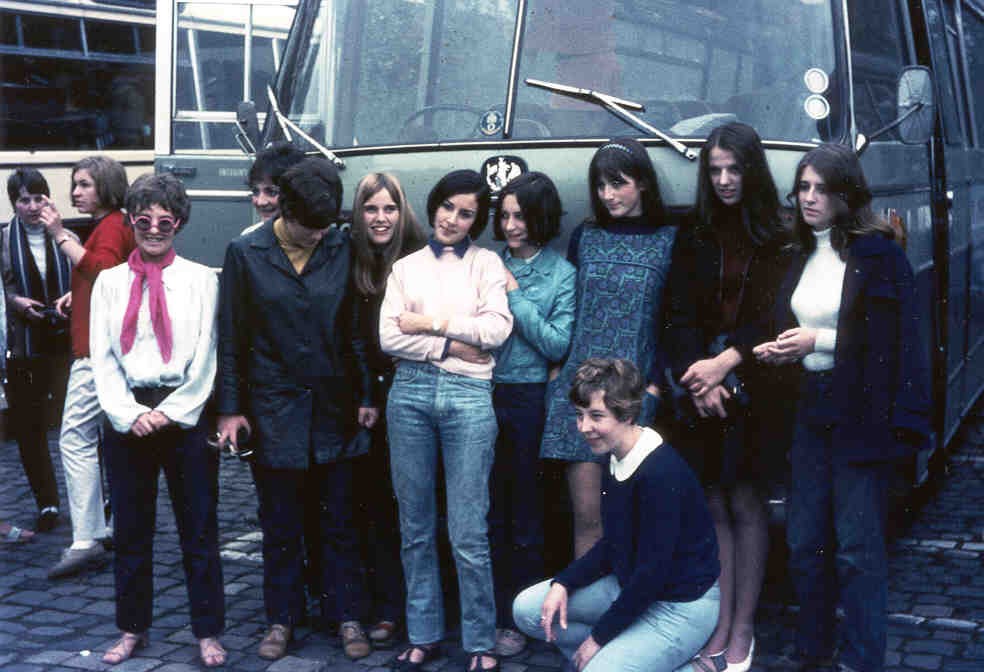
Julie Houlton, Kate Vernon, Andy Sharpe, Alice Freshwater, Nicola Swann,
Carol Leader, Margaret Smith, Julie Shoulder, Vida Schepens, Nicola Gebolys,
Avril Schepens, Helen Leech

Penelope Roberts, Hilary Orton, Jack Smith, Joyce Fraser, Pam Wright, Andy Sharpe
BERLIN 1969

Gordon ( Robinsons ), Hilary Ball, Anne Jameson, Margaret Whiteley
AUSTRIA 1968
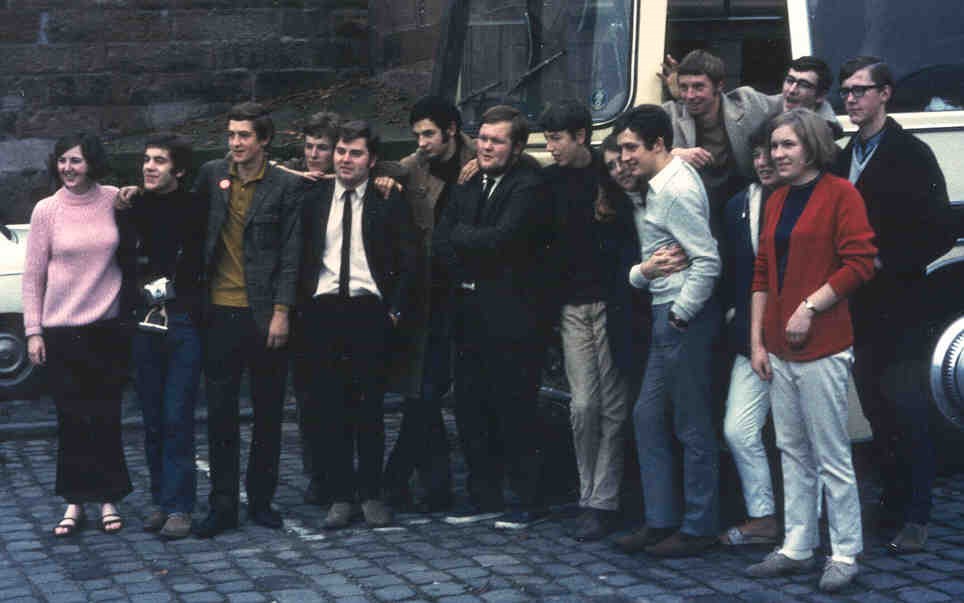
Mary Jessop, Dave Matthews, Rob Walker, Dave Pugsley, John Smith, Martin Slipp,
Maurice Turlington, Graham Parker, Avril Schepens, Andy Smith, John Turner,
Phillippa Elloway, Kate Vernon, Roger Harvey, Kim Punshon

Janet Crawshaw, Robert Heard, Tony Lewis, Marion Davis, Alice Freshwater,
Jimmy Watson, Andy Sharpe, Julie Shoulder, Hilary Ball, Pamela Wright,
Jane Monk, Julie Houlton
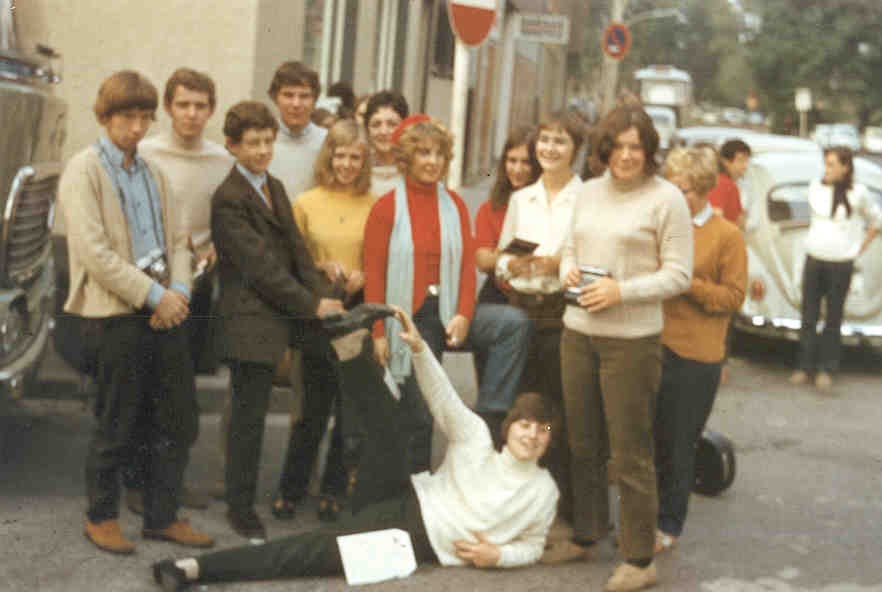
John Turner, Ian Heard, Robert Heard, Tony Lewis, Marion Davis, Alice Freshwater,
Andy Sharpe, Julie Shoulder, Hilary Ball, Pam Wright, Jane Monk, Julie Houlton

Sandra Roberts Sybil Olive
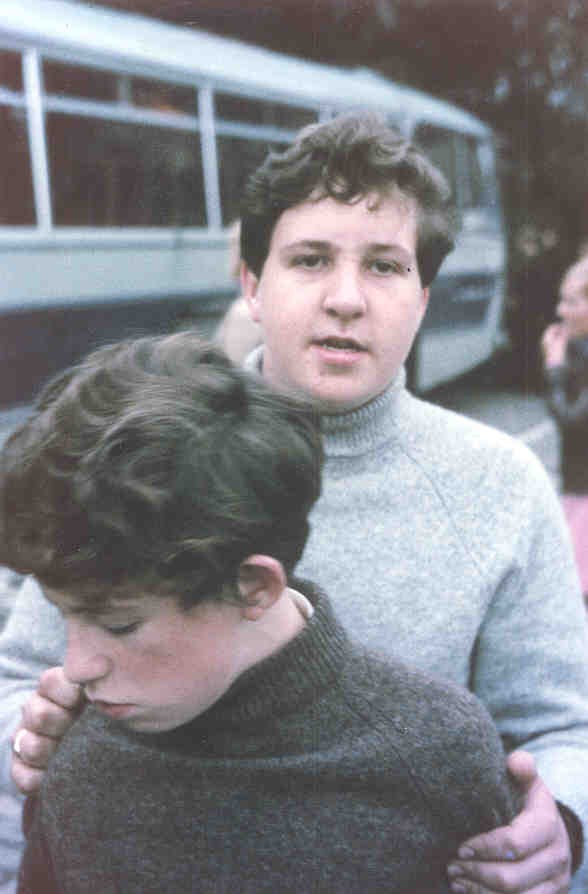
Robert Heard, Steve Draycott
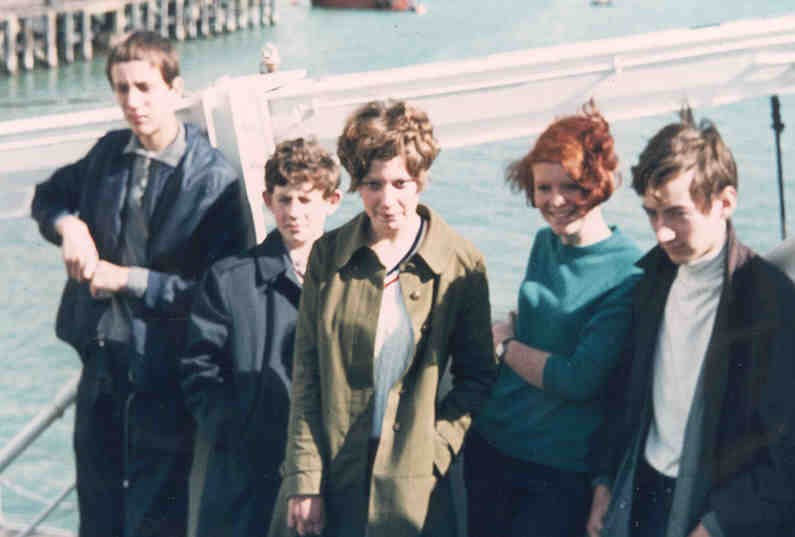
Stephen Gee, Robert Heard, Barbara Bath, Sandra Roberts, David Thomson
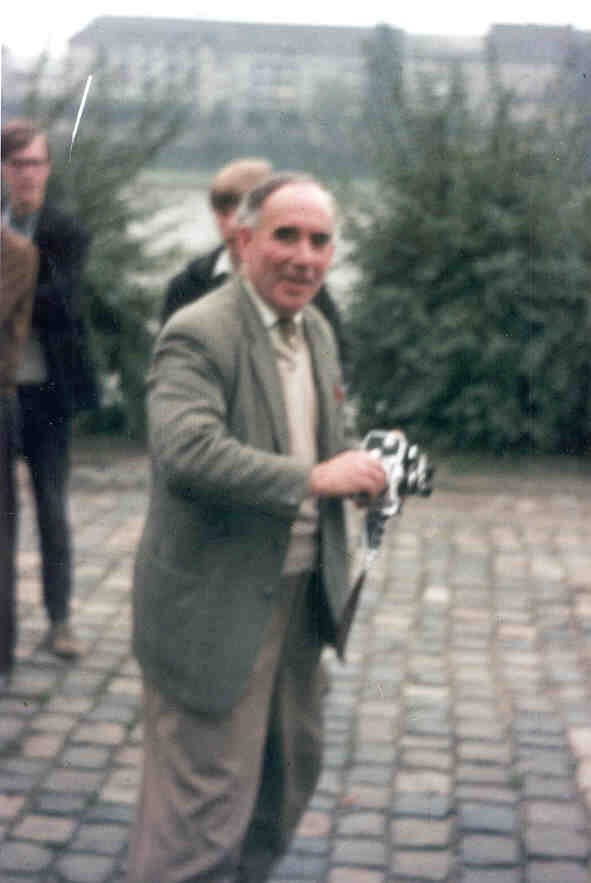
Jack Smith
Passau Bathing Facilities
Chapter Seven
1969
On January 23rd we played our first orchestra concert of the year at Melton Mowbray. By now I was becoming annoyed that everyone in the orchestra appeared to have been awarded his or her blue badge except me. No one had ever offered me one and there didn’t seem to be any obvious route to being awarded one. It didn’t appear to me to be quite the done thing to march up to one of the teachers and enquire what criteria had to be met to acquire one, so I quietly seethed that none of them had noticed that I didn’t have one. I pretended to everyone else that I wasn’t bothered.
————-
By now I was constantly juggling my diary to cram in all the different musical activities and trying to ensure that they didn’t clash with each other. Besides this, I was also part of a thriving social scene at school that was quite separate from the orchestra. I had a number of friends of both sexes that I met through school and through going out with my mates in the evenings. This was the sixties after all, and we went through all the contemporary experiences of the time: making love without worrying about AIDS, smoking pot, parties, discos and driving scooters, motorbikes, or old cars.
Discos were brilliant in these years. We would go along and dance to the latest pop, soul or Tamla Motown records. Much of the social activity surrounded travel to the discos and pubs and we all went through stages of owning scooters, motorbikes or cars that were forever breaking down. Nobody cared about drinking and driving; we hadn’t heard of a seatbelt and rarely bothered with a crash helmet.
————-
Our next big orchestral event took place on 22nd February when we took part in an afternoon recording session for Radio 3 at the De Montfort Hall. This was our contribution to the ‘Youth Orchestras of the World’ series. Strangely enough the concert wasn’t actually transmitted until the 9th April on the following year – a mere 14 months later!
On March 28th we were invited to the Royal Festival Hall in London to play in a mixed concert (with other schools) as part of the ‘Youth Makes Music’ festival (25). This was a particular honour for us as the patron, Her Majesty Queen Elizabeth The Queen Mother, was present in the auditorium during the performance.
On Thursday 3rd April, I, along with every other orchestra player, had to obtain permission to leave school at 1:00 p.m. and travel to Leicester to set off for our annual residential Easter course that was to be based in Cirencester. This was a deliberate choice of venue as it was close to Michael Tippett’s home and therefore allowed us to rehearse with him without the need for extensive travel on his part.
I had mixed feelings about our relationship with Sir Michael because, although I respected him as composer and appreciated the prestige that he brought to the LSSO, I didn’t really care for his music. All of us had our favourite and not so favourite pieces and composers. I didn’t like modern music very much and some of Tippett’s work seemed to me to be without shape or form, or to be downright discordant to the point of being painful. I supposed I must have had very unsophisticated tastes; I certainly didn’t have the musical experience to make proper judgements on these issues. I was much happier with other 20th Century composers such as Copland and Bernstein but still couldn’t bring myself to fully endorse the Tippett, Mathias, and Ives school of modern composition. I think the final straw for me came when Michael decided in his Shire Suite that the percussion section should drop tin trays of cutlery on the floor as part of the sound effects. But it was just a personal point of view; I know others who had the opposite perspective.
Cirencester was another great course. After our first rehearsal our top priority was to discover the nearest pub. Having done so we would take it over completely. Of course, we wouldn’t consider ‘adopting’ a pub without it meeting three criteria:
a) it had to be big enough to accommodate all of us
b) it had to turn a blind eye to the fact that we were all under-age
c) it had to have a jukebox
Our chosen local met all three demands satisfactorily, and the main song that we would put on the juke box and sing along with would be Mary Hopkin’s ‘Those were the days my friend’. Of course, the second line soon became ‘..they made my ….. bend’ and we quickly made other substitutions. The whole pub was in uproar as about fifty of us sang along to our own version of the song. The local reaction varied between bemusement and annoyance.
It’s hard to believe now, but in those days it was much more common to find a piano in a pub. You could usually find a local who could bash out a few tunes on a Saturday night and everyone would have a sing-along. Obviously, this took on a new dimension when the kids from the LSSO arrived. We had dozens of piano players. In Cirencester we would normally pester Richard Fairhead until he got up and played. Although he could play popular stuff, I doubt if the local drinkers had often heard a sixteen-year-old play the Tchaikowsky piano concerto in their bar.
There was the usual riotous behaviour back in the dorms. I was introduced to the most amazing phenomena. One of the boys demonstrated that if you held a match to your bottom and farted, the gas would ignite briefly and produce a flash of light. I couldn’t believe this initially and thought it was some sort of trick. It soon became obvious that it wasn’t and that anyone could do it. A number of us spent the rest of the course trying to produce the most spectacular explosion (but not me).
Halfway through the course I became aware that a new trombone player had joined the orchestra. His name was Paul Barrett and he came from Ratby, a village near Leicester. He was totally unused to the unique social aspects of our orchestra courses and was therefore teased by some of the older boys. I stuck up for him a bit (carefully though) and we soon became friends – as we are to this day.
During the course Eric introduced a new piece into the repertoire; it was called Rhapsody in Blue. From the opening clarinet glissando we knew that this was something different. It was jazz! Well, almost. It was certainly different to some of the traditional classical or modern works that we were used to. There was a trumpet solo near the beginning of the piece (which was always nerve-racking) and this led into the main part of the work, the piano solo played normally by Richard. It seemed wonderful to me that the orchestra could change idioms so quickly for a piece that we’d never previously played and a style that we hadn’t encountered before. I took to it straight away, and, because we could jazz up our part in various places, it quickly became a firm favourite.
The percussion section featured largely in this piece. One of things that always fascinated me was the sheer range of percussion instruments that existed in the orchestra. We seemed to have every conceivable device that was capable of making a noise. Apart from the obligatory timps, base and side drum, they could wheel out vibraphones, gongs, glockenspiels, tubular bells, cymbals and triangles. You name it, they had it. There were generally about four or five players in the section, and they all appeared to me to possess a kind of mutually telepathic understanding of who was playing what without ever discussing it amongst themselves. The standard of play in this section always seemed very high.
One of the fascinating aspects of being in the orchestra was the constant ebb and flow of personal relationships. Each time we came together for a course, new relationships between boys and girls would develop and, in no time at all, they would start ‘going together’. The corollary of this was that there was always a sense of expectation or anticipation, the surprise that so-and-so would have taken to you-know-who, the passions that were aroused, and which emerged from seemingly innocent friendships.
Sometimes a couple would get together and the pairing would last forever – even leading eventually to marriage. Ask Glenn and Toni for example. I’ve always felt slightly envious, in a strange sort of way, that these friends and fellow players embarked on a lifelong relationship where both of them knew what it was like to be in the orchestra at the same time, with all the shared memories and friends.
Naturally the friendships didn’t have to turn into romantic involvement. Both boys and girls drifted from one group to another as they adopted new friends, or became part of an acknowledged circle of players, like permutations of the in-crowd.
I took part in an unusual event during the course. Someone from one of the major music companies had come down to the course to ask if we could produce a demonstration tape for a brass quartet that they were about to publish. Jimmy and I were selected as first and second trumpet and, together with our first horn and trombonist, we rattled off the piece (which was actually quite difficult) with some accomplishment. It was only afterwards that I had the thought that it might have been nice if we had received some kind of payment or recognition for our efforts. It was the first time in the orchestra that I’d felt exploited in any way.
We gave a concert towards the end of the course and also did some recording for TV. As usual, whenever we gave a concert, we took every opportunity to grab a pint if there was time. One of the unfortunate side effects of this was that you could easily get caught short and be desperate to go to the toilet half-way through the first or second half of the concert.
Sometimes we were in absolute agony. We’d be crossing our legs, rocking back and forward in pain, and would literally sprint for the toilet when the applause died down.
————-
This year was an important one for the LSSO and for Eric in particular, since it was the twenty-first birthday of Eric’s appointment as County Music Advisor and therefore of the CSM and LSSO itself. The celebrations began on the 28th April and continued for a week.
The festival began with a concert at the De Montfort Hall involving the Intermediate and Junior orchestras and the Intermediate Orchestra Military Band. During the week a number of Area concerts were given around the county and, in Leicester itself, a number of informal talks with composers, such as Richard Rodney Bennett, were also arranged.
The climax of the festival was a concert given by the Senior Orchestra and mixed schools choirs, conducted by Eric (Sir Michael Tippett was taken ill the day before the concert) with Richard Rodney Bennett as the piano soloist (26). I was personally less bothered about the concert and far more concerned at the prospect of getting back to a party in Market Harborough afterwards where I knew I had a fair chance of getting off with a girl that I fancied from school. So much for musicianship.
As far as I was concerned, there were always other musical events going on. If it wasn’t the LSSO or the band, it was something to do with school. I remember playing every night for weeks on end, taking part in everything from a concert with local musicians in St Hugh’s church in Market Harborough, to an invitation to play with my cousin’s pop group.
I’d previously been involved with a number of pop events initially through being heard in the jazz group and then through word of mouth. My cousin, Steve Fearn, used to play regularly at the County Arms in Wigston and I played with him there and with other guest bands – including the Worzels! I went on to play on a couple of records that my cousin hoped would make him famous but although he managed an appearance on Top of the Pops, he never quite made it into the top twenty pop charts.
Apart from all this, throughout all the Saturday morning orchestra rehearsals and tours, I was still playing regularly with the Harborough brass band. We would take part in various concerts and contests playing everything from traditional marches to solos and popular music. We would give concerts that would cater for popular tastes on the bandstand in the local park. I had to play items like the post-horn gallop on a real post-horn. A far cry from Michael Tippett!
My schoolwork was not going well. I was always dashing from one rehearsal to the next and never had time to revise for exams. I couldn’t say I was really bothered; I was only interested in girls, music and beer.
My seventeenth birthday arrived and my father took me out for my first driving lesson in his car. This was a relatively straightforward learning curve for me because I had become accustomed to driving all sorts of different vehicles when I had helped out on the local farm. The main difference this time was that I had to learn to keep the car on the road.
————-
On the 30th May the Senior Orchestra played its next concert at the Loughborough College of Art and Design under the baton of Norman Del Mar, as part of the Loughborough Festival (27). One of the main features of the concert was Marion Turner playing the Brahms Violin Concerto. Two days later, our Cirencester recording of Putnam’s Camp was shown on BBC2.
So what was it like to play in the orchestra then? Well, the atmosphere was a mixture of youthful enthusiasm, comradeship and being part of this wonderful complex sound. You looked around and saw your colleagues playing difficult passages competently and you took it for granted that they were as much in control of the music as you were. Strangely enough, we never really became over-nervous in the concerts. I suppose because we weren’t a professional orchestra we could relax to a certain extent, playing works that we’d rehearsed and were familiar with. But I believe that the real secret was the fact that we believed in ourselves. We were all good at what we did. It wasn’t that we didn’t make mistakes, but it was an unusual event if one of us couldn’t actually master our own particular part. To me, we played Russlan and Ludmilla, Brigg Fair, Rhapsody in Blue, and all the rest just as well as the score described. To a practiced ear, if we had a weakness it must have been intonation especially in the strings where there were so many players working in unison. I suppose the main problem with being completely objective about this was that we weren’t sitting in the audience and so we weren’t in the best place to judge the overall sound.
I certainly felt that I was playing the part as well as it could be played. The notes were all there and the tone reasonable. Perhaps the main difference in the standard of play between the professionals and ourselves was that we didn’t have the strength in depth in each section, or the consistency of performance. Inevitably, we didn’t have soloists in each group down to the last desk or player. You wouldn’t expect it at our age.
The orchestra took part in the Bath festival in June. On the 21st, at the Forum, we performed a program conducted in its entirety by Michael Tippett and which included Richard Rodney Bennett playing Rhapsody in Blue (28). More importantly we performed the world premier of Michael’s Interlude II, with Colin Davis an interested observer in the audience. We returned to Leicester immediately after the concert, arriving back in the early hours of the morning.
We continued to rehearse faithfully every Saturday but I don’t think any of us ever objected to the routine. Not only was it great fun, but I think our youthfulness gave us a resilience and an unquestioning acceptance of the demands placed on us. Whether everyone else felt the same enthusiasm that I did, I don’t know, but I may have been slightly biased because I was in the brass section. I thought we had the best laughs because, a) we were right at the back and far away from the conductor’s discipline, b) we could sneak out through the back of the stage for a quick fag, and c) we had the least to do so there was plenty of time for playing pranks.
The best times were when Jimmy led, I sat next to him and Malcolm Bennett sat next to me. We were always taking the mickey out of the other sections. The woodwind used to get it worst, especially if they played a duff note. We would jeer or hiss (good-naturedly, of course) or rattle our trumpet mutes.
When a particularly jaunty number would come along, Jimmy and I would mince about with our wrists in time with the rhythm, or jiggle around in our seats. Inevitably, amid all this larking around, we would occasionally either knock the music stands over, accidentally kick all the mutes that were lined up on the floor in front of us, or dislodge the music from the stand. One of our favourite tricks was to play a B flat when the orchestra was trying to tune to concert A.
There was a serious side though. Although we could play the music easily enough, there were two big problems. The first was counting thousands of bars rest and coming in in the right place. This was especially difficult if someone distracted you – as they often did. The second was when a piece was set for trumpet in a different key. Although we could all transpose pretty well if the part was written for trumpet in C, the other keys were a very difficult to transpose to if the notes came quickly.
————-
One of the major events of the summer was that Eric’s book ‘Time to Remember’ was published. It recorded the history of the CSM from its foundation, through the early years, and up to the present day. It included a wonderful account of his early struggles for support and funding, and the tributes from the many famous people who were associated with the CSM only emphasized his achievement.
But at the time, and because I didn’t know any better, I thought the book was interesting but that the girls in the orchestra were more interesting. There were so many pretty and attractive ones that I was always trying to work out whether there was some sort of link between musicianship and the fact that we appeared to attract girls who were prettier than the average for the female population. There just seemed to be so many girls that looked lovely. Not that I was fussy of course; I had no morals or standards whatsoever. I remember spending many happy minutes kissing a double bass player after orchestra rehearsals even though we weren’t actually in a relationship together!
————-
The summer holidays came and I went on a family holiday. This was a slightly unusual event for me because I was so accustomed to going away on orchestra courses instead. We went to Butlins and I took a friend from school. The event that I remember most vividly was being stuck at the top of the ‘Big Wheel’ when it broke down.
————-
The summer wore on and soon the great day arrived when the Senior Orchestra would go to Germany for two weeks. It was a prestigious tour; the full itinerary was:
Berlin: concerts at the Kaiserwilhelmkirke (29) on the 10th; at the Philharmonie (30) on the 12th; and again (31) on the 13th.
Hannover: concert at the Theater am Aegi (32) on the 15th
Gelsenkirchen: concert at the Hans-Sachs-Hans Grosser Saal (32) on the 16th
Cologne: concert at the Gymnasium Kreuzgasse (32) on the 17th
Eric conducted the first concert and we were joined by Michael Tippett and Richard Rodney Bennett for the remainder of the performances. For the last four concerts we were accompanied by various German choirs for the Tippett work.
We were all bleary-eyed when we left home as the buses started to arrive at the various pick-up points at 4:45 a.m.! We had the usual journey to the ferry but this time we sailed to Hamburg for a change to save on overland travelling time. This meant that we had overnight cabins, which were very handy if you felt sick. I failed miserably at trying to tempt any unwary females back to mine. We arrived on the continent and travelled on in our fleet of Robinson buses, stopping now and again for toilets and the obligatory packed lunches of fruit pies, crisps, etc. We had some limited sponsorship in those days and various organisations paid for bits and pieces, although I’m not sure if many saw the irony in the fact that the sandwiches on the way to Berlin were paid for by Petfoods of Melton Mowbray.
The Robinson bus drivers were all familiar to us by now and we treated them like old friends. On this trip we had the usual stalwarts – Bill, Gordon and John. I felt some sympathy with them as we had this expectation of asking them to drive us to this or that concert hall in some completely unfamiliar city and assuming without question that they knew where they were going. Inevitably we often got lost, made worse by the fact that if we did, there were usually three buses and a lorry in convoy that got lost. We also had the habit of asking them to drive to, and park in, some completely unsuitable places for buses. We invariably wanted them to get us as close as possible to the stage door of some concert hall or other only to discover there wasn’t room to park or turn around. We would all stare out of the windows as they attempted to do thirty-point turns with inches to spare between lines of parked cars.
We arrived in Berlin and, to our delight, found that we were staying in a brand new youth hostel complete with bar and table football machine but, more importantly, we could come and go as we pleased. Of course, our top priority as soon as we had settled in was to find and adopt our own bar. I remember four of us setting out on this noble quest (including Jimmy, Lew and Ian Heard), and, after much lager-sampling in various bars, eventually succeeding and establishing ourselves around a table in ‘our’ new bar and basically trying to drink our lagers faster than the barman could keep bringing them to us. Within a couple of hours we were completely drunk. As soon as we got outside two of us were sick in the street.
It wasn’t all that surprising that I started to develop stomach problems, and although I didn’t know it at the time, I had managed to develop a stomach ulcer. I was in quite a bit of discomfort and Jimmy, anxious to protect his number two trumpet player, offered to come with me to the chemist to obtain something to make me feel better. An elaborate mime ensued as Jimmy tried to explain to the Pharmacist (with lots of pointing) that I had a bad stomach. The Pharmacist at last got the message and came back with a nice bottle of medicine and I took three teaspoonfuls. The next day I had the worst diarrhoea in the history of the CSM.
None of us knew much German. As far as we were concerned all we had to learn was the numbers so that we could order the right number of beers and we were simply happy that the word for beer was the same. We only ever learnt the name of one meal; it was ‘Strammer Max’, which meant ham and eggs. Whenever we were in doubt about what to eat in some strange bar we always reverted to Strammer Max.
On the second day I formed a friendship with an oboe player who shall remain nameless. I’m not sure how it started except for the usual smiles but in no time at all we were starry-eyed with each other. I was incredibly excited because I just knew (don’t ask me how!) that she felt the same way as I did about us making love.
————
We rehearsed with our usual gusto and the time soon came for our first Berlin concert at the world-famous Philharmonie hall. The program included our own familiar mixture of modern English (Tippett) and early 20th Century English (Delius’s Brigg Fair). It turned out to be one of our all-time great performances and earned us a great deal of critical acclaim. Stewart Mason (the Director of Education), sitting in the front row, was moved to tears.
I don’t think we really paid much attention to the customary praise that we received in those days. We took it pretty much for granted and I don’t remember any of us getting too excited. We didn’t need telling when we’d played well or badly – we knew it instinctively anyway. But we were very much aware of our own competence. We didn’t need to be in the audience to judge the overall effect. If the notes were all there – and the intonation was acceptable across all the sections – we knew we must have been close to the mark. Furthermore, we had all heard each other play many times both individually and in sections during rehearsals, and we knew that we weren’t carrying any passengers. Still, the applause and the verbal tributes were always welcome and gave us that extra confidence that helped us relax.
Anyway, the next day my mind was on other things as a small crisis developed. We were rehearsing in one of the big churches when Jimmy was suddenly taken ill. He developed bad stomach pains and started coughing up a little blood. We were all very concerned.
Mind you, we were all smoking like troopers and Jimmy was one of the worst, so if you take the over-drinking into account, it wasn’t surprising that one of us would be ill. Jimmy had to take the rest of the day off to recover and I had to lead the section. Fortunately, it turned out not to be as serious as we had at first feared, and he managed to recover on the following day.
I’ll say one thing for the staff on these tours; they were forever organising excursions to enable us to see the famous landmarks while we were abroad – presumably to further our education or perhaps to make sure that it wasn’t all music.
The first sightseeing stop on this tour was a trip to the Olympic stadium. I’ll never forget standing on the top steps of the auditorium and seeing the vast empty arena and imagining the scene all those years ago when Hitler was the guest of honour for the activities. It was pretty eerie.
The next day we were all herded onto a riverboat for a trip down the Rhine. This was actually pretty boring because there was nothing to drink.
It didn’t take us long to discover that all the good bars were in a big street called the Kurfustendamm. This street was all bright lights – some of them red – and loud bars. We made one, called The Showboat, our favourite and would head for it every evening. The second night we went there I discovered the ‘boot of beer’ tradition for the first time. This involved filling a large glass boot with beer and trying to drink it down in one. I’m not sure how much beer it held, certainly it was a litre – maybe two. There was also a particular knack to drinking it because the beer would suddenly force its way along the glass and hit you in the face. We all had a go at trying to knock it back but usually managed to spill most of it down our chins and shirts.
We would often skip whatever evening meal had been prepared for us wherever we were staying, and eat out during one of our drinking binges. Apart from Strammer Max, our diet in Germany seemed to consist of veinerschnitzel, gildenschnitzel or wurst, washed down with lager and a fag for afterwards.
Whenever we went on tour we would be constantly singing the latest hits, rugby songs, or our own tunes, and our tour to Germany was no exception. It was truly the great sixties pop era. The Beatles, The Stones and all the rest were at the height of their fame and we would sing along with whatever came on the bus radio or the jukebox in a local bar. Even when we were abroad, the most popular records were in English and were the ones we were used to hearing back home. Being musicians we were always improvising or creating our own words and harmonies. Our favourite on this trip was Hey Jude by the Beatles, although we also liked J’taime because it was a bit naughty in those days.
One of the features of these types of concerts was the encore. Normally, we would assume that we would be asked to play an encore, but you could never be quite sure whether the audience would be big enough, whether they would clap long enough, or whether we’d played well enough! The worst aspect of this was the uncertainty; we never seemed to agree in advance what the encore might be. It was all very well for the strings when, at the last moment, Eric murmured which piece he decided that we should play for the encore. But at the back we had to rely on Chinese whispers to find out what the hell was going on amidst significant background noise from the hall. If the woodwind failed to pass the message on, we’d be left panicking about what we were supposed to be doing with the seconds ticking away and no music on the stand.
At the end of the first week we heard that we were going to be taken on a visit to East Germany. This was a bit of a shock since there weren’t many visitors to East Berlin in those days. We duly arrived at Checkpoint Charlie and had to wait for an hour while all the Russian soldiers entered the bus, checked us all, and looked around the seats and in the baggage holds. There was no talking allowed while this was going on and they were unusually suspicious of any Western-type souvenirs, particularly one of Polly Whitely’s cuddly-toy mascots.
We got a tour of the East, which I remember mostly for the number of buildings that were in exactly the same state as they must have been after the end of the war. They still had the bullet holes in the walls, and the whole place was grey, drab and desolate beyond description. The organisers had actually pre-booked us into a hotel for a short break mid-way through the excursion and we had some horrible coffee and cake for refreshments before it was back on the buses to return to the West. We weren’t unhappy to get back to West Berlin.
The members of staff weren’t always saints on these foreign tours. They would sometimes take part in something that Eric turned a blind eye on and which parents would definitely have disapproved of. One night some of them went to what can only be described as a strip club. They soon found themselves in trouble when they were charged for food and drink at exorbitant prices. This caught them out completely and they were unable to pay the bill – which led to one of them ignominiously having to send back to the hostel for more money.
We left Berlin and moved on to the other cities on the itinerary. We went through all the normal routines associated with our changes of accommodation and giving concerts while trying to squeeze in a quick drink at every spare moment. One thing that always amazed me was that we could arrive at some strange venue, tired, dishevelled, drunk or asleep, and within a matter of minutes transform ourselves in the changing rooms to a smart concert orchestra complete with shined shoes, pressed clothes, combed hair and washed faces. We would walk onto the platform with the audience none the wiser about the state that we had been in less than an hour before. I’m sure that one of the reasons for ability to uplift ourselves in this way was the team spirit that existed within the orchestra. No one wanted to let anyone else down and we all knew that the contribution of each and every one of us was vital.
In the Philharmonie, Berlin with Sir Michael Tippett
We eventually returned exhausted from Germany amid the familiar scenes of sorrow, celebration and praise. Nearly all the senior players that had been with the orchestra when I had first started had now to leave to go their separate ways. A number of leaders of the various sections were excellent instrumentalists and would be sorely missed.
More importantly for me, the time had come for Jimmy to move to London and the Royal Academy. For the first time I was now the leader of the trumpet section. I was both honoured and determined to try and be just as good a player and leader as Jimmy had been. I reasoned that although Jimmy had this exceptional ability, there was no reason why I couldn’t lead the section just as well. Like all my colleagues, I was able to play all the works in the repertoire competently, and had all the necessary ability to tackle new challenges built up by eight years experience of being a musician.
My new number two became Malcolm Bennett, who had been sitting on my left all through the previous year, and Philip Rea joined from the Intermediate Orchestra as second trumpet.
And so the orchestra was transformed and a new era began.
———–
Of course, the instrumental changes were only one aspect of the new order. Dave, Ian, Steve, Paul and myself had become the senior boys and the nucleus of the new ‘in-crowd’. This was a proud tradition of hooliganism and drinking that we had inherited. We knew what was expected, and there was a silent acknowledgement between us that we would ‘do it in’, and be ‘over the top’ just as dozens of other boys had done and been before us. Ian was the only link between the two eras having been ‘in’ with both the old and the new.
Miss Oboe and I continued to see each other now and again when we returned form the tour although it was difficult with her living in Hinckley and me in Market Harborough.
My summer exam results were poor as a result of not having revised at all and I left school on our return from Germany to look around for a job. I was offered a place in a local company as a Computer Operator – which I accepted – and soon began to earn a living for the first time. I told Eric about this employment and, to my eternal gratitude, he overlooked the fact that you were only supposed to be in the orchestra if you were still at school.
————-
I was also spending more time working on the farm so as to earn enough money to go out and buy drinks, clothes, etc. Just after I’d returned from Berlin I found myself assigned to the particularly horrible, boring task of mucking out the cowsheds. While sweating away, I’d have a quiet chuckle to myself at the utter incongruity of it all. It was absurd to think that here I was shifting compost on Kelly’s farm in a cowshed in the middle of nowhere when, a week ago, I was on the stage in the Berlin Philharmonie being applauded by an enthusiastic audience! It was crazy!
————-
I continued to take part in a number of brass band events. I became disillusioned with the standard of play with the Market Harborough band and decided to join Ratby band instead. This enabled me to play in the same band as Paul, which meant that I had a splendid drinking pal at all the gigs.
————-
As a general rule, activity in the orchestra was relatively low during the autumn term. We had to absorb the new intake of players, and, often as not, new music would be introduced into the repertoire at the same time.
The most important event for me was that during November I passed my driving test. Two weeks later my Dad had bought me my first car – probably because he was already fed up with me pestering him to borrow his. So for £45, I was the proud owner of a green Standard Eight. Being a bit of an individual sort of chap, I immediately painted the wheels yellow.
I began to take it to rehearsals, partly to show off, but also so that I could avoid catching the bus and having to ask my father to pick me up. By Christmas I was an experienced driver of six weeks and my best friend from school and I decided we would drive to London just for the hell of it. We got lost of course and spent Christmas Eve night sleeping in the car.
So the orchestral year was virtually at an end. As well as all the other concerts, we’d played at the Roundhouse in London, performed on BBC Radio 3 for ‘Youth Orchestras of the World’, and BBC2 for ‘Music Now’. There was nothing left but to prepare for our usual end of term Birstall course by rehearsing all day on Saturday 20th December.
Chapter Eight
1970
The New Year began and the orchestra began to take shape. Although we had lost many good players during the autumn, new ones of excellent ability had taken their place. Andy Mack had taken over the legacy of Dave Pugsley as our solo clarinet player, Margaret Whitely had followed in the footsteps of Andy Smith on timps, Sue Phipps establishing herself as the solo flautist, and Robert Heard and Sybil Olive came to prominence on violin.
Early in January twenty-five of us were selected to travel to London for the weekend to make a recording of a special piece, called Dead in Tune, which had been commissioned for us with music by Herbert Chappell, and words by Robin Ray.
This piece had been originally played by members of the Vienna ’68 tour and was broadcast as part of the ‘Sounds Exciting’ series in February of that year. Now we had found that we had been asked to record the piece two years later as a follow up to the initial broadcast.
We all stayed in single rooms at the Royal Hotel overnight. Even though there wasn’t much time for drinking we still managed to stay up most of the night. My main objective, as usual, was to try and discover the room numbers of the eligible girls.
It turned out to be a gruelling weekend, not helped by vast amounts of alcohol. Our only light relief was the endless fascination of watching Robin Ray chain-smoke but only doing so by using the first half an inch of his cigarette before stubbing it out. We couldn’t comprehend such extravagance.
The recording was a daunting experience for me. Because, in effect, we became a chamber orchestra, along with all the other wind and brass leaders, I was the only representative of my instrument. This exposure put a great deal of pressure on each one of us, with no one else to cover up mistakes or count time.
We rehearsed tirelessly. I played reasonably well on Dead in Tune but pretty badly on the reverse side – a piece called George and the Dragonfly. I’m sure that the producers had no idea that you couldn’t run through the piece seven times if you’re a brass player without it having an effect on your lip. I played well through all the first takes but by the last one I was exhausted and played a split a note. I was mortified when they used this final take for the record.
————
We returned from Leicester and Eric gave me a blue badge! I didn’t know whether to be very pleased at the award or annoyed that it had taken him so long. On balance, I suppose I was pleased really.
On the 16th March, I was invited to play in a week-long local operatic production of Carmen in Ashby with Ian and one or two other members of the CSM. This was another reminder to me that one could earn money from music by playing in these sorts of local events.
The following week, on the 26th March, I was back with the Senior Orchestra again as we gave a concert in Peterborough as part of the Festival celebrations.
————-
Earlier in the year Paul had told me that he was going to try and make music his career and to achieve this ambition, that he was going to audition for one of the music colleges in London. He suggested that I do the same.
I hadn’t really thought about this before. I was very naive in these sorts of matters. Nobody had ever discussed with me the idea of college, university or anything after school. Worse than this, in terms of the county’s musical efforts, the Market Harborough area had always seemed to me to be the poor relation as regards the amount of coaching, advice and tuition available to young musicians. Certainly, I’d never had – or been offered – a lesson of any kind. No one had ever talked to me about my musical aspirations, my performances or technique. I just got on with playing.
So I asked Paul about the colleges. He said I had to play the piano as well as the trumpet for my audition. I couldn’t play the piano and thought it was a bit late to start. He also said something about a theory exam that I didn’t understand. I took up the subject of the entrance audition with one of the teachers and he advised me to play something modern since the judges didn’t like ex-cornettists playing some technical brass-band-type solo.
By the time I’d found out where to apply to and what to do, there was only time to apply to one college – the Royal College of Music in London. Eventually, on April 15th, I went down and tried my best at the theory, even though I didn’t really know any. I didn’t have anything to offer on the piano or second instrumental piece, and I played a complicated modern piece for my trumpet audition that even the piano accompanist couldn’t manage. She had to keep stopping, which, not surprisingly, rather put me off. After I’d finished they asked me to play a minor scale. A what?
Of course, I didn’t make it. It was weeks later before I heard that Jimmy had played ‘The Forresters’ at his Royal Academy audition the previous year. The Forresters is a classic brass band solo designed to show off one’s technical ability. But I could play this piece!
So, there it was. I supposed I could have tried again the following year but I didn’t fancy being twelve months behind Paul and by then I was earning good money from my job in the computer industry.
Like many of my contemporaries in the LSSO, I was left wondering whether I would have made it as a professional musician. Who can say? I knew I was as good as many who had got into college. I guess I would either have struggled against the really exceptional players or maybe – with lessons and tuition for the first time – I would have become one myself. I think I subconsciously resented missing out on being a professional musician for some years afterwards but I suppose I’ve mostly come to terms with it since (perhaps).
The Easter course this year took place in Oxford. I took my car to St. Margarets bus station and left it in the open-air car park. It was very early in the morning and as there was no attendant there, I didn’t know what to do about paying. In the end I stuck a note under the windscreen that said ‘Back in 8 days’. When I boarded the bus everyone laughed when I told them about it but it seemed to me to be a perfectly reasonable thing to do.
The social side of this course was superb. Basically, we invaded the New Inn in Cowley Road every night and got drunk. The pub was absolutely packed with under-aged drinkers; you couldn’t move. God knows what the locals thought. We built up an amazing rapport with the hosts of the pub and they quickly became friends with us all.
It wasn’t just that we spent money and packed the pub every evening; they seemed genuinely interested in what we were doing. We would keep the jukebox going all night and once we’d had a few drinks, sing along to whatever was playing. The favourite soon became ‘Bridge over Troubled Water’ by Simon and Garfunkel. There were other highlights and my own personal ambition was finally fulfilled when I managed to persuade Trudi Vero to stop on the way back from the pub for a prolonged snogging session.
During the course we made a television recording for ‘Omnibus’. Meanwhile, at break time we were kept amused by a violin player called Stephen Gee. Stephen had a remarkable gift for mimicry and he would do wonderful impressions of people in the orchestra, or, more often, the conductors and teachers. He had Eric off to a tee with his famous start-of-rehearsal expression of ‘I’m working!’ (Eric had another couple of variations on this theme. Prior to performing the Walton, he would bring us to attention by calling out “I’m partitaring”, and, perhaps best of all, before a Hindemith rehearsal he actually uttered the immortal phase “I’m metamorphosing”).
The annual Easter course was always a good time to introduce new works to the orchestra and this one was no exception when we were asked to play West Side Story. It was a marvellous modern piece to perform, alternating between jazz and ballad. Our trumpet part was both exciting and difficult, giving us lots of chances to blast out the high parts at the top of our lungs. Subtle we were not!
The highlight of the course was a formal concert by us in the main hall of Oxford School on April 8th (33). Apart from Eric as conductor, Bryan Kelly also came to take charge for his own composition – Sancho Panza, as well as Bliss’s Introduction and Allegro.
Robert Heard played the Bruch violin concerto. Robert was leader of the orchestra by now, which was a justifiable recognition of his talent and even more remarkable given that he was quite a bit younger than some of the other section leaders. Even before he became leader he had benefited from an orchestra policy that I always thought commendable where violinists were often brought forward to play major concertos even thought they weren’t front desk players at the time.
However, the performance didn’t go quite to plan when Eric accidentally bashed into Robert’s violin with his left hand and, after a few minutes, Robert’s strings began to unwind. We were forced to stop while he re-tuned, and eventually we had to start the piece from the beginning again!
The Oxford course was attended by Argo producer Fred Woods, Sir Authur and Lady Bliss, Frank Wibaut, Michael Tippett, William Glock (Head of BBC Radio), Bert Chappell and the TV producers from Midlands Today. After the concert we all had dinner together. This was a celebration of the concert, the recording, and all that we had achieved. Halfway through the event, an urgent telegram arrived which Eric, expecting great praise at the performance of Bryan Kelly’s work, proudly opened in front of us. It was from the landlord of the New Inn and his wife wishing us good luck for the concert. Ha-ha.
We returned to Leicester. My car was still there and I got into it and drove off together with my sticker. I never did pay anything for the privilege of using the car park.
————-
Orchestra rehearsals began again as soon as the summer term started. I loved them and looked forward to Saturday mornings all through the week. Some of the best laughs we had were when particular sections or individuals were selected to play a few bars of a piece which they hadn’t got quite right. When they did it well we didn’t say anything. Standards were generally high and we expected competence. But now and again, a section would make a cock-up of something and we would either giggle, hiss, or make derogatory comments. Of course, being right behind the bassoons, adjacent to the horns, and just in front of the percussion, gave us the opportunity to insult everyone at random.
Sometimes we would liven things up by throwing various objects at other players. Sweet wrappers, bits of paper, in fact anything that was to hand was a legitimate object to lob at other players providing it didn’t do them any physical damage. The bassoons definitely got it worse; we would wait for the loudest part possible and lean forward to blast their eardrums – whenever we could play for laughing that is.
Our next concert was on May 1st when we played at the Edward Herbert Hall at Loughborough University. With scarcely time to draw breath, we were soon back in action on the following weekend at the Long Eaton Festival.
Whenever we staged these concerts, there were always chamber orchestra pieces where brass players weren’t required. We took the opportunity to sneak off the stage and either have a fag or nip to the nearest pub if it was practical. If we weren’t required for a piece before the interval, or immediately afterwards, this was an added bonus. Sometimes we took this to extremes and managed to get back in our seats before the next item with seconds to spare. On many occasions you would be looking around desperately hoping for the appearance of your fellow instrumentalists before the start of some work which would highlight their part. On one occasion Paul and Dave got back from the pub just too late to join the orchestra at the start of Bliss’s Introduction and Allegro. Eric was incensed and, after the initial ticking off, threatened to ban them from the orchestra. Eric being Eric, he later let them off – albeit with a stern warning.
————-
By this time Ian, Paul, Dave, Steve and myself quite often met socially outside the orchestra for nights out together on the beer. Sometimes we would all turn up at someone’s party, including one memorable one at Dave’s house. On other occasions it would be the Plough Inn at Ratby followed by chips on the way home. Nobody cared less about drinking and driving in those days (God forgive me) and we would do anything for a laugh.
————-
We took part in the Cheltenham Festival this year and went away for a few days to give two concerts on the 8th and 9th of July. The first program included the first complete performance of Sir Michael Tippett’s The Shires Suite, especially written for the orchestra. Michael conducted us for his work – both for the rehearsals and the concerts. The second concert took place at the Cheltenham Ladies’ College.
Unfortunately though, on this brief trip the powers that be hadn’t been able to find us anywhere convenient to stay, and it had been hastily arranged that we were to be billetted in an RAF camp.
On our first night there we were determined to find the nearest pub as soon as possible. We walked for hours without success only to find that the wretched camp was miles from anywhere. Dejectedly, we returned only to find that the main gate had been locked. We had to search along the fence for another way in, and although the darkness didn’t help, there’s no doubt that we were spurred on by the distant barking of patrol dogs. Some of us – convinced we were about to be torn apart by the dogs or shot as intruders – actually climbed the fence to get back inside the camp.
On 28th August we went to London for three days to make our third record. This was a very important project for we were to be conducted by Sir Arthur Bliss, Sir Michael Tippett and Andre Previn. Andre Previn was a very popular public figure in those days and we were all excited at the prospect of being conducted by someone so famous. We stayed at the Royal Hotel again, propping up the bar into the early hours as usual.
Whenever there’s talk of conductors and the difference they may or may not make to an orchestra, I always think of Andre Previn. Obviously he was famous and we were all a little intimidated to have such a well-known personality in charge. But there was no getting away from the fact that there was a marked improvement when he took over the baton. He somehow managed to obtain a cohesion and sound that I’d not heard us produce before. He was particularly fussy about the strings, and demanded perfection by taking them over their part again and again. It really paid off. Whether one can tell from the record or not, I don’t know, but the impact on the performance was unquestionable.
————-
The Senior tour abroad this year was to Munster, and we left on 6th September.
We gave four concerts:
Munster – Stadttheater (34)
Ludinghausen – Appollotheater (35)
Wuppertal (36)
Munster – Apostelkirche (37)
During the tour Vanessa Hood played the Albinoni; Stephen Whittaker, the Gershwin; and Robert Heard the Bruch Violin Concerto.
As usual, we all got very drunk on the boat. Some of us were sick but it was difficult to tell whether the cause of this was the sea or the booze. Dave had a particularly bad time. Before we got off the boat the next morning, he was advised to drink a ‘Prairie Oyster’ as a hangover cure. Being alcoholic, this sounded intriguing to us until we discovered that it contained a raw egg. To Dave’s eternal credit, he drank it.
Paul was the only one of us who didn’t smoke like a chimney. To avoid being left out of things he decided to adopt a pipe as being a substitute form of tobacco worship. He thought this looked very dignified. So did we until he went to the toilet, pulled up his trousers at the same time as he flushed the loo, and the pipe disappeared down the pan.
We arrived in Munster. The buses pulled up and we couldn’t believe our eyes – we were staying in a convent!
It actually turned out to be pretty good place to stay. We were all allocated to our own small room and I quickly spotted the potential for a bit of hanky-panky. I had previously always fancied a flute player. I managed to get chatting to her, and we soon became involved with each other.
The social aspect to the course was great because we were based in the same place and had lots of time off in the evenings. We soon marked out our favourite bars, soon deciding that the ‘Black Horse Disco’ was the place to be.
The place was full of British soldiers. Whatever bar we were in, they seemed to be there too. We soon made friends with several of them, especially the ones in our ‘local’.
One night we were drinking with half a dozen of them. Somehow or other we ended up challenging them to a ‘down in one’ contest. They were totally confident and put forward their biggest chap – a man-mountain of about eighteen stone. Our champion was Steve, whom we knew could knock them back pretty quickly. We set the beers up on the bar, the order was given to go, and they went for it. One-point-five seconds later Steve had finished his and we went wild with celebration. I’d never seen a drink vanish more speedily; I’d had no idea of Steve’s prowess, and we were in complete awe of him. The place was in uproar and the squaddies couldn’t believe it.
In the meantime, Miss Flute and I were forever kissing when we went out and I fancied her like mad. I decided to see if she felt the same way. She did, I did, and we did together in her room.
I can’t remember much about the concerts on this tour. Actually, it wasn’t a particularly prestigious trip compared to previous years, more of a continental residential course. But I don’t think we worried about this excessively at the time because staying in one place certainly had its social advantages.
One of the aspects of the time that I do remember was the way that we would troop into a concert venue for the first time only to utter a dispirited groan when we instinctively realised that there’s wasn’t enough room for all of us. This was particularly true of churches and school halls. When you’ve got somewhere between seventy and a hundred musicians with chairs, music stands, percussion, and so on, it takes up an awful lot of room. Many’s the time that we were jammed right up next to each other in the wrong place physically and musically to hear what was happening in the section that was most closely related to your own.
I suppose another issue that went hand-in-hand with this was that the changing rooms were sometimes equally cramped. We’d all be falling over each other trying to change from our casual clothes into our black concert gear, attempting to comb our hair and warm up our instruments. On one or two treasured occasions, there were no separate facilities for boys and girls and we had to change together. This was tremendously exciting given the challenge of sneaking looks at the girls in their underwear while pretending casual indifference.
There are a number of pieces that were my ‘favourites’ during the various concerts and tours. But, out of all of them, the two violin concertos – Bruch and Mendelssohn – are definitely in my top ten. The Bruch was especially haunting and every year we always seemed to be able to come up with a young musician that could take on the challenges of the work.
Later in the week we were back in the bar again. We all got drunk as skunks, as did the squaddies. As we came out, the squaddies backed their car into the orchestra bus (one of the bus drivers had taken us to the bar in it). We took the matter very seriously and threatened to report the soldier to his commanding officer unless he recompensed us on the spot. He offered to take us to the NAAFI on the following night for cheap booze and fags. We agreed immediately.
So the next night we met as planned and he smuggled us into the army base. We walked into a huge NAAFI canteen full of soldiers. Slowly the buzz of conversation tailed off as we walked down the middle of the room until there was total silence. I don’t think it was so much the surprise of seeing civilian youths as much as the fact that some of us had very long hair. One of the soldiers shouted out ‘long-haired bastards’, and this broke the atmosphere. One of ‘our’ soldiers gave us free whisky and cigarettes and we scarpered quickly before they changed their minds.
By the second week, some over-enthusiastic administrator had decided that it would be a good idea for us to play one of the local German schools at football. I was very apprehensive when I heard about this given that most schools had about five hundred boys and we had thirty-five. Half a dozen of us, myself included, were reasonable footballers but I knew from the beginning that we were sure to be outplayed.
Anyway, the big day arrived and we prepared ourselves appropriately for the occasion. Obviously nobody had warned us about this match before we had left home and we didn’t possess any suitable kit of any kind. So there was nothing for it except to improvise by wearing the most outrageous and outlandish strip in the history of the Bundesleague. We had on anything we thought would raise a laugh including borrowed clothes from the female members of the orchestra. But we did have a secret weapon – a number of girls who would act as trainers.
The match started and, unbelievably, we scored first! We were amazed and did a lap of honour to celebrate. That was the end of our stamina, so our lead didn’t last long and they soon equalised and then went ahead. We then proceeded to come up with every sort of delaying tactic, foul, or diversion imaginable.
Every five minutes, one of us would retire to the sidelines for an ‘injury’ to be tended to by the girls. Suitable fortified by beer and schnapps, we would then return to the field of battle. We eventually lost 8-1, which I thought was pretty good in the circumstances.
All too soon the tour was over and we made our way wearily home. We gave our customary return concert at the De Montfort Hall (38). Eleanor Cooke played the Dvorak violin work, and Nigel Allcoat the organ in the Poulenc.
Miss Flute and I didn’t last long after we returned from Munster. She lived right on the other side of the county and it was never going to be easy for us to meet regularly. But at least we remained friends afterwards.
It was time again for some of the senior players to move on. The biggest blow for me was that Paul would be leaving to go to music college in London. It was also time for Lew, who was the last but one of the old in-crowd, to leave, along with several other notable players.
And so the orchestra was transformed and a new era began.
————-
I counted myself particularly fortunate. I was eighteen, and, strictly speaking, I should have left the orchestra by now but Eric had shown no signs of asking me to step down and I wasn’t going to volunteer. Amazingly, it meant that I could stay with the orchestra – alongside all my friends – for the whole of the next academic year. What super good luck!
————-
All the social events in my non-orchestra life continued. I went to the local discos with my friends where the big chart-toppers would be Deep Purple, Free, and all the rest. We would get back to someone’s house and listen to Tubular Bells on the record player until we knew it by heart. We would pursue girls relentlessly, but there was often an undercurrent of violence from other youths who would react to a careless stare or slight nudge on the dance floor.
Once Paul had settled down in London, I went to visit him as often as I could, especially if it was a weekend when there would be a party. I always felt at home then because the guests would be almost exclusively other musicians – amateurs, professionals, and students.
We had the usual Christmas course at Birstall during the holidays. The highlight for me this time was that Paul came back from college to play with us on the last day. Immediately afterwards we decided to jump in my car and drive to Glasgow so that we could spend the new year with his relatives.
MUNSTER 1970
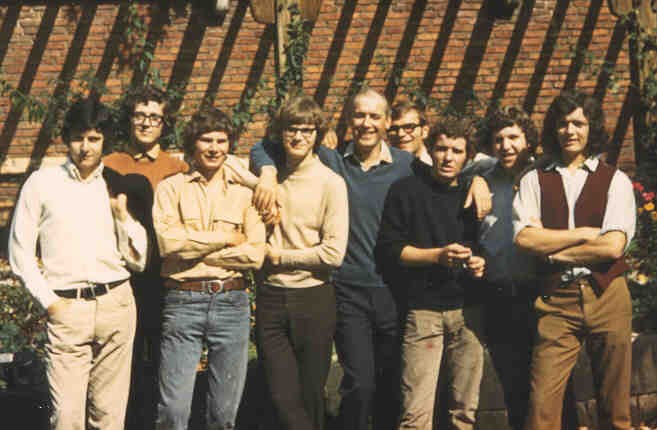
Paul Barrett, Dave Smith, Tony Lewis, John Whitmore, Bill Robinson,
Mick Robinson, Ian Heard, Stephen Draycott and Yours Truly
AUSTRIA 1968
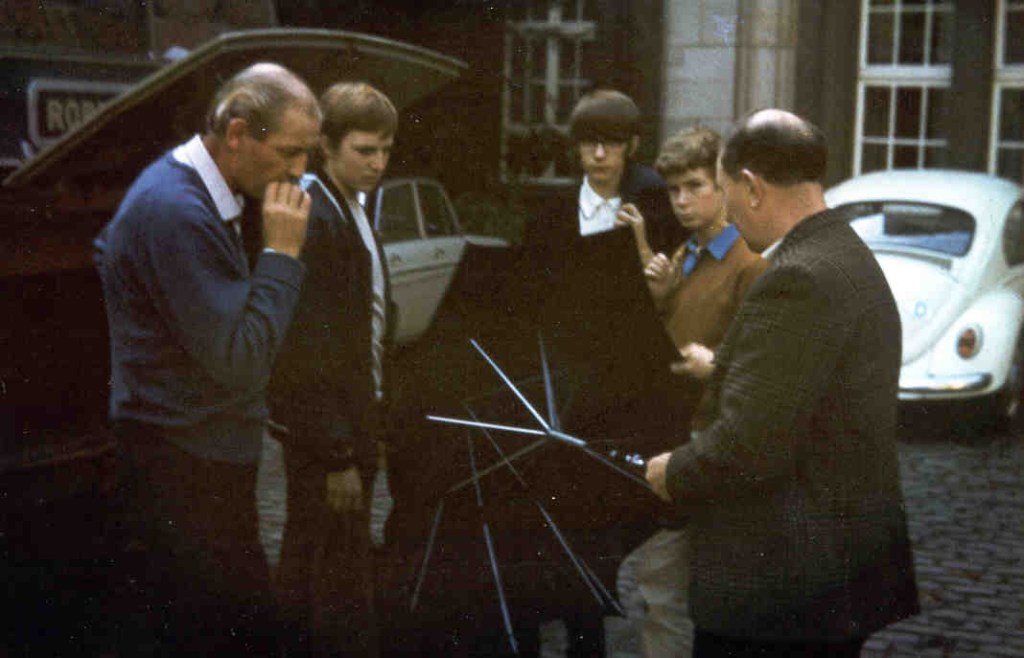
Bill Robinson, Malcolm Bennett, John Coney, Philip Rea, Eric Pinkett
Chapter Nine
1971
The new year came and I knew that it would be my last year in the orchestra. I decided that even if I wasn’t going to attend music college, I would leave home this year to move down to London as soon as I left the LSSO in September. London seemed pretty glamorous compared to Gumley and Leicester.
Paul still came back from college at weekends to play alongside me in the Ratby band. We drank five or six pints after rehearsals on a Sunday morning, and slept it off around his grandmother’s house before starting on the beer again in the evening.
The Saturday morning orchestra rehearsals continued but with one difference. Now we were old enough to drink legally and had our own transport, we would often go to a pub in Birstall following the morning sessions. Gone were the days of the tuck-shop, Vimto and Hula-hoops!
————-
The Easter course this year was to take place in the Isle of Man.
I think we took drinking to new height on this course and, in hindsight, it was nothing to be proud of. We started on the ferry and Ian, Dave, Steve and I drank fifty-six cans of beer. How do I remember the number? Simple, we wouldn’t let the waiter take the empties away. We created a stack on the table in front of us that looked like some sort of grotesque sculpture.
I was completely drunk for three days, and I’m told that I was carried down the gangplank (I find this hard to believe), and the first couple of days were a blur.
We were billeted in a school again but at least it was quite close to the town centre of Douglas. It meant that we had no trouble getting to the pubs every night.
We had an excellent time on the course, mainly it seemed because we were concentrating on rehearsals in one location rather than trouping around from one venue to another. Apart from the drinking, we got up to all the usual tricks, including hiring pushbikes to ride along the sea front. While this doesn’t seem unusual, it takes on a different perspective when one is completely blotto (particularly from the other pedestrians’ point of view).
Luckily, you couldn’t be prosecuted for drunk-cycling. We got back and decided it would be a good idea to go for a swim in the sea. We didn’t have any swimming costumes so we just went in with our clothes on anyway.
Strangely enough, I can’t really remember anything about the music on this course, with one exception. The Easter course was always a good time to introduce new works, and we continued with this tradition when Eric confronted us with West Side Story. It was a marvellous piece to play, alternating between jazz and ballad. Our part was both exciting and difficult, giving us lots of chance to blast out the part and scream the high notes at the top of our lungs. Such subtlety!
The school where we were staying was situated in the heart of Douglas, and the girls in the orchestra attracted the usual unwelcome attention of the local boys (in retrospect, I guess this attention may not have been so unwelcome from the girls’ point of view). As it was our sworn duty to protect the girls from these outsiders (so we could have them to ourselves), we began nightly patrols.
Just after the course began I met a viola player and things were never quite the same for me again. So started a long relationship between us that lasted many years. Being teenagers, we were crazy about each other, as only teenagers can be. On the return ferry trip we spent the whole voyage glued to the rail at the back of the boat watching the sea and kissing. It seemed very romantic.
We gave our usual local concert in Douglas before returning home.
————-
On May 7th the orchestra went to Brighton for a short break which would involve giving a performance at the famous Pavilion. Also, as part of this mini-tour, we were invited to play at Roedean College, and we gave a concert in their main hall.
We were installed in quite a decent Brighton hotel and soon got up to the usual tricks. Ian was worse than any of us and, with the help of Dave’s mini van key, borrowed a car! Even a pseudo-hooligan like me was impressed. He promised that he would only take it for a brief spin along the front and then return it unharmed to its original position in front of the owner’s house and nobody would be any the wiser. It was a good plan except for one fatal flaw; when he got back the parking space had been taken up by another car.
————-
We returned from the Brighton trip and were soon back in rehearsals in anticipation of our summer tour.
Miss Viola and I had started going out seriously since our return from the Isle of Man. We went everywhere together if we could – despite her parent’s reservations (she was two year’s younger than me). But one thing led to another and we became lovers just after my birthday in May.
————-
We had been invited to the Harrogate Festival on the 1st August and played a single concert there. For a change we were installed in a very posh hotel and returned there after the concert and drank in the bar until 2:00 a.m.. We then decided we were hungry and ordered rounds of beef sandwiches which were very expensive and for which we did not have the means to pay! I was lucky enough to spend the night with a clarinet player, even though I was disappointed to find that my usual charm offensive failed to win her over to my obvious but dishonourable objective.
————-
The summer holidays came around and, in September, we went to Switzerland in what would be the last concert tour for many of us, myself included. We were determined to have a good time.
We would be playing concerts in Lugano, Le Locle, Neuchatel, St. Maurice, Sierre and Geneva.
In hindsight, because it was our last trip, the demons got into some of us. The drunkenness was over the top and we were breathtakingly immature. The only thing that stopped us going completely over the top was the fact that most of us had girlfriends by this time. Certainly Miss Viola and I were very close and she kept me from getting totally out of hand.
We started with all the usual routines: load the orchestra van, board the buses carrying suitcases and booze, and off we went. We had the usual binge on the ferry, although I toned it down a bit because I was with Miss Viola for some of the time and didn’t want to show myself up in front of her even more than I usually did. However, the problem with drinking on the ferry before boarding the buses was the same one that we’d all had experience of for many years. Within the first few miles we would be bursting for a pee! It was always the same story, with us becoming increasingly desperate and imploring the bus driver to stop even though the staff weren’t keen to do so. Sometimes only passionate pleading from us would result in a quick comfort stop and we all raced off the bus to pee in the nearest hedge, while everyone looked at us through the bus windows with either amusement or pity.
We stopped fairly regularly on the autobahns and at roadside lay-bys nearer Switzerland. Although I wasn’t particularly interested in it, the scenery was breathtaking (I can’t remember any of it but I can tell from the photos) although I was more interested in the social side of things. Still, we would often stop for up to an hour and walk up the mountains and it made a welcome break from sitting in the buses all the time.
Many couples like Miss Viola and myself would wander off to lie on the grass to talk and kiss in relative privacy compared to the bus (there were always loads of us kissing on the bus). Unfortunately, one of our trombonists suffered some embarrassment when he got carried away with a viola player and failed to spot that we had all returned to the bus. A hundred of us watched them from the lay-by as they lay on the mountainside oblivious to our shouting.
We were all pretty grown up by now (physically if not mentally) and I think Eric may have been worried that some of us would get ourselves into trouble. He was certainly very annoyed to find Miss Viola sitting on my bed in the dorm one day and threatened to send her home for what would have been an entirely innocent interlude.
We settled down to rehearsals and practised some of our newer repertoire. We performed our first concert to much acclaim and then went on to the other cities in the itinerary. In Geneva we had plenty of free time, and spent many most of our time exploring the nightlife.
All the lads had ‘steady’ girlfriends by now. Miss Viola and myself, Dave and Jenny, Steve and Eleanor, Ian and Sandra (sometimes). We thought we were quite mature to have ‘settled down’ in this way.
Miss Viola and I managed to find time to go off together and we stopped and bought coffee at a pavement cafe. Being a romantic sort of chap I’d bought her a ring and used the occasion to present it to her – praying that the lads wouldn’t find out.
Eventually, the time came for us to give our last concert together with the present membership of the orchestra. It was an incredibly emotional and moving occasion for so many of us.
I don’t know who put the program together. I only know that to include the Enigma variations was either a cruel coincidence or deliberate act of wanton nostalgia. As we went through Nimrod we were all in tears. There can never have been a moment like it for most of us, except perhaps afterwards, when we’d completed our encore and trooped off-stage.
I put my trumpet away in its case and instead of all the usual noise and chatter, a strange subdued atmosphere existed in the changing rooms. As I closed my case I knew that I would never play in the orchestra again. It was the saddest day of my life; the orchestra had been everything to me.
We journeyed home in the bus without the usual high spirits, just having a few quiet drinks from our duty-frees. However, we did have one more chance of a good night out before we got back to England. To break up the journey it had been decided that we would stop for the night in Paris. As you can imagine, we weren’t deeply upset by this.
Because we hadn’t known in advance that we were going to be stopping in France, none of us had any French money. All except Steve that is; so off we went by metro to a bar in the Rue de L’Opera where we had beaucoup de bieres and a good meal. Why Steve had the money, and how he had enough to treat us all, I’ll never know, but we were all grateful for his generosity.
The next day we travelled back on the ferry and returned to Leicester. I got off the bus at St. Margaret’s and said goodbye to my friends. This involved lots of hugging and kissing and more tears. I kissed girls who I’d never kissed before because I knew it would be the last time I’d see them. Many of us knew subconsciously that we were saying goodbye to each other for the last time after so many years of growing up together and sharing our lives, loves, work and passions. But, above all, sharing our childhood. None of us wanted to be the first to leave, even though many had parents waiting for them to take them home. Eventually I forced myself to say a last goodbye and went to find my car. I’ll never forget the emotional upheaval as I walked along the pavement knowing that after nearly eight wonderful years it was all over.
————-
Obviously, I continued to play with other musical groups but that unique part of my life had gone forever. I think the only things that helped mitigate the blow was that I continued to see Miss Viola, which maintained a link with the orchestra, and that I’d at least made some plans for the future with my best friends.
The orchestra actually gave a concert at the De Montfort on the 24th September as our return had coincided with the retirement of Stewart Mason, the County Director of Education, and the concert was to be in his honour(39). Mr Mason had been a very influential part of the whole County School of Music story, especially in his appointment of Eric, and his support for him over the years.
SWITZERLAND, 1971


A Coach Stop in the Swiss Mountains: Boys to the Left, Girls to the Right
SWITZERLAND, 1971, conducted by John Westcombe
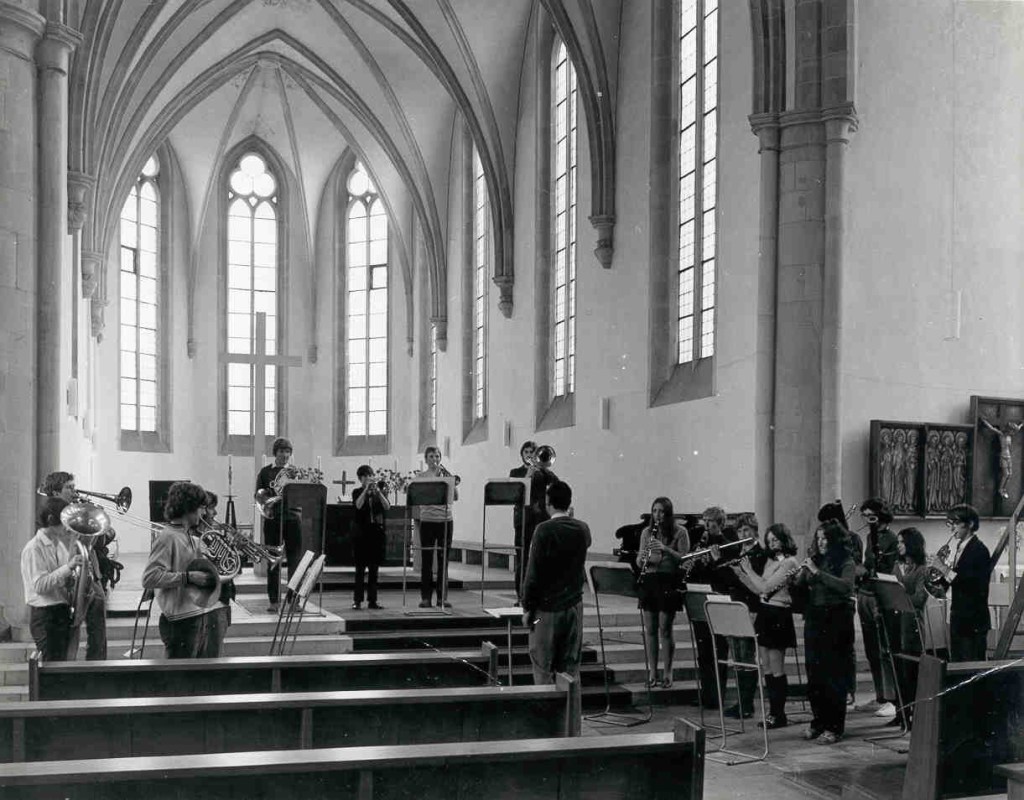
Chapter 10
1972 onwards
That wasn’t the end of the music of course. In September, Steve, Dave and I moved to London to join up with Paul. Steve and Paul were at music college while Dave and I had decided to pursue our careers in the business world.
Early in 1972 I joined the newly-formed City of London Band. This was a new venture made up of brass players who were based in London – usually at the colleges – and who didn’t get the chance to play with brass bands back home. Imagine my delight to walk into my first rehearsal to find so many ex-LSSO players already there – Roger Harvey, John Smith, Glenn Pollard and Jimmy Watson. The band went on over the next few years to some great success including television and recording work.
Paul and I continued to play for the Ratby band for another year or two and got up to our old tricks, especially when we went with the band on a tour to Holland. We had a tradition to live up to! I’ve since played in other bands and orchestras and continue to enjoy being involved in music in my own way. But I’m sure that I feel the same as all my fellow players in the LSSO, when I say that music-making as an adult is an altogether different proposition to those early days when we were so young.
Dave, Steve, and I lived together in London for a few years and saw Paul almost every day. All our social life revolved around our friendship and other musicians, and we had many great times together (perhaps another book!).
Nowadays we’ve all made our own lives and careers, some of us involved in the music business professionally and some of us as amateurs. But I’m immensely proud that we’ve stayed in touch, and, indeed, we still get together every now and then for a few drinks.
As you can imagine if you’ve read this far, there’s a special bond between us because we all spent our youth ‘Growing up with the Leicestershire Schools Symphony Orchestra’.
Epilogue
So what was it all about then? In essence, I think it was about Eric’s legacy to us all; about the influence he had on all our lives, and the influence, that, in turn, we have had on our family, friends and the people we’ve come into contact with. If you harness and nurture a creative force in people it spurs them on to achievement and to accomplishment. By enriching us and teaching us about music and life – as well as bringing music to so many – I sincerely believe that Eric made a small but unique contribution to the culture of this country.
What a wonderful vision he had. Who among us can claim to have had such fulfilling lives? His legacy to all of us lives on in the countless thousands of children who have learnt to play a musical instrument, and who have been part of the LSSO.
I must also say that we were incredibly privileged. Education and leisure budgets weren’t under the pressure in those days that they are now. Buses were paid for without complaint, schools and concert halls lent free. But the greatest privilege was to have grown up with music and to have toured and performed at so many famous venues without even realising the significance of it at the time.
It was also about growing up in a spirit of comradeship and with a common sense of purpose. Although this spirit can be emulated or reproduced in adulthood, it’s difficult to re-capture the wonder of childhood that is unique to that period of discovery in one’s life. I suppose there are other youth organisations that strive to achieve a similar bond. But schools aren’t optional and youth clubs don’t require hours of practice, or living and eating together in relative intimacy. But more especially, there’s the simultaneous taking part, the combining and nurturing of a shared talent with each individual contributing to the overall art that is the unique entity that is an orchestra. This surely then is what is so very special about making music as a child.
And so the orchestra was transformed and a new era began……
Philip Monk
13th March 1996
Appendix A
Orchestral Programs
Program No. 1
Russlan and Ludmilla Glinka
Piano Concerto No. 1 Beethoven
The Morning Arne
Ritual Fire Dance De Falla
Interval
Divertimento Malcolm Arnold
Loch Lomond (Wind Band) Arr. Richardson
Two Elegiac Melodies Grieg
Folk Songs of the Four Vaughan Williams
Seasons
Program No. 2
Thieving Magpie Rossini
Clarinet Concertino Weber
Wand of Youth Elgar
Interval
Music for Wind
Simple Symphony Britten
Variations on an English Baumann
Folk Song for Cello and
Orchestra
Vltava Smetana
Program No. 3
Thieving Magpie Rossini
Concertino for Clarinet Weber
Wand of Youth Elgar
Interval
Music for Wind
Simple Symphony Britten
Vltava Smetana
Program No. 4
Si J’etais Roi Adam
Concerto for 4 Violins Vivaldi
Salon Suite Bridgeman
Concerto for Oboe Haydn
Interval
The ‘bb’ and ‘cf’ (Wind Band)
Concerto for Bassoon Capel Bond
Concertino for Clarinet Weber
Polly Wolly Doodle arr. Richardson
Program No. 5
Italian Girl in Algiers Rossini
Concertino for Clarinet Weber
Karelia Suite Sibelius
Interval
Suite in F Holst
Simple Symphony Britten
Classical Symphony (Gavotte) Prokofiev
Four Scottish Dances Malcolm Arnold
Program No. 6
Italian Girl in Algiers Rossini
Oboe Concerto Haydn
Karelia Suite Sibelius
Interval
Simple Symphony Britten
Sinfonietta Arne
Four Scottish Dances Malcolm Arnold
Program No. 7
Italian Girl in Algiers Rossini
Concertino for Clarinet Weber
Classical Symphony (Gavotte) Prokofiev
Karelia Suite Sibelius
Interval
Suite in F (Wind Band) Holst
Simple Symphony Britten
Four Scottish Dances Malcolm Arnold
Program No. 8
The Italian Girl in Algiers Rossini
March Caprice Delius
Violin Concerto in D Mozart
Interval
Original Suite (wind band) Gordon Jacob
Flute Concerto Robert Valentine
Variations on an English Herbert Baumann
Folk-Tune
Divertimento Malcolm Arnold
Program No. 9
Men of Prometheus Beethoven
Hungarian Rondo Weber
Concerto in E Flat Stravinsky
(Dumbarton Oaks)
Sinfonietta William Mathias
Interval
Les Petits Riens Mozart
Flute Concerto Dittersdorf
English Dances Malcolm Arnold
Program No. 10
Rosamunde Schubert
New World Symphony Dvorak
Hungarian Rondo Weber
Sinfonietta William Mathias
Interval
Les Petits Riens Mozart
Music for Wind Group
Concerto in E Minor Dittersdorf
Eight English Dances Malcolm Arnold
Program No. 11
Men of Prometheus Beethoven
New World Symphony Dvorak
Flute Concerto Dittersdorf
Sinfonietta William Mathias
Interval`
Piano Concerto No. 9 Mozart
Music for Wind Group
Four English Dances Malcolm Arnold
Program No. 12
Semiramide Rossini
St Anthony Chorale Brahms
Concerto for Oboe and J.S. Bach
Violin
Divertimento Malcolm Arnold
Interval
Concertante Music Alan Ridout
Moorside Suite (Wind Band) Holst
Sinfonietta William Mathias
Program No. 13
Overture: Candide Leonard Bernstein
Violin Concerto in G Minor Max Bruch
Partita for Orchestra Sir William Walton
Interval
St. Anthony Chorale Brahms
Boutique Fantasque Rossini-Respighi
El Salon Mexico Aaron Copland
Program No. 14
Pique Dame Suppe
Clarinet Quintet Mozart
Pineapple Poll Sullivan
Symphony No. 3 Beethoven
Interval
Sinfonia Semplice Anthony Hedges
Violin Concerto No. 6 Vivaldi
Sinfonietta William Mathias
Program No. 15
Overture: Candide Leonard Bernstein
Variations symphoniques Cesar Franck
For piano and orchestra
Partita for orchestra Sir William Walton
Interval
Divertissement Ibert
For chamber orchestra
Brigg fair Delius
(an English Rhapsody)
El salon Mexico Aaron Copland
Program No. 16
Fantasia on Greensleeves Vaughan Williams
Brigg Fair Delius
Partita Walton
Little Music for Strings Michael Tippett
Interval
Variations on an Elgar
Original Theme
Program No. 17
Peter Smoll Weber
Matinees Musicales Benjamin Britten
Romance No. 2 In F Major Beethoven
Sinfonia Semplice Anthony Hedges
Interval
Original Suite (For Wind Band) Gordon Jacob
Music for Strings Vaughan Williams
Elizabethan Dances William Alwyn
Serenade For Orchestra William Mathias
Program No. 18
Overture: Candide Leonard Bernstein
Variations Symphoniques Cesar Franck
For Piano and Orchestra
Partita for Orchestra Sir William Walton
Interval
Brigg Fair Delius
(An English Rhapsody)
Little Music for Strings Michael Tippett
El Salon Mexico Aaron Copland
Program No. 19
Candide Bernstein
Variations Symphoniques Cesar Franck
For Piano and Orchestra
Brigg Fair Delius
(An English Rhapsody)
Interval
Partita for Orchestra Sir William Walton
El Salon Mexico Aaron Copland
Program No. 20
Candide Bernstein
Little Music for Strings Michael Tippett
Variations Symphoniques Cesar Franck
For Piano and Orchestra
Interval
Brigg Fair Delius
(An English Rhapsody)
Partita for Orchestra Sir William Walton
Program No. 21
Candide Bernstein
Partita for Orchestra Sir William Walton
Variations Symphoniques Cesar Franck
For Piano and Orchestra
Interval
Fantasia on Greensleeves Vaughan Williams
Enigma Variations Elgar
Program No. 22
Overture: Candide Leonard Bernstein
Piano Concerto No. 2 Alan Rawsthorne
Interval
Divertissement Ibert
For Chamber Orchestra
Little Music for Strings Michael Tippett
El Salon Mexico Aaron Copland
Program No. 23
Overture: Candide Leonard Bernstein
Little Music for Strings Michael Tippett
Variations Symphoniques Cesar Franck
For Piano and Orchestra
Interval
Brigg Fair Delius
(An English Rhapsody)
El Salon Mexico Aaron Copland
Program No. 24
Concertante Music Alan Ridout
Little Music for Strings Michael Tippett
Piano Concerto No. 2 Alan Rawsthorne
Interval
Brigg Fair Delius
(An English Rhapsody)
Partita for Orchestra Sir William Walton
Program No. 25
Metamorphoses On Themes Hindemith
Of Weber
Scottish Dances Iain Hamilton
Old Hundredth Arr. Vaughan Williams
Program No. 26
Prologue Michael Tippett
Metamorphoses On Themes Hindemith
Of Weber
Rio Grande Lambert
Interval
Overture: Sancho Panza Bryan Kelly
Scottish Dances Iain Hamilton
Rhapsody in Blue Gershwin
Epilogue Michael Tippett
Program No. 27
Russlan and Ludmilla Glinka
Violin Concerto in D Brahms
Interval
Metamorphoses On Themes Hindemith
Of Weber
Scottish Dances Iain Hamilton
Program No. 28
Putnam’s Camp Ives
Quiet City Copland
The Rio Grande Lambert
Interval
Sellinger’s Round Michael Tippett
Rhapsody in Blue Gershwin
Prologue, Interlude II Michael Tippett
and Epilogue
Program No. 29
The Banks of Green Willow Butterworth
Metamorphoses On Themes Hindemith
Of Weber
Interval
Overture: Sancho Panza Bryan Kelly
Sellinger’s Round Michael Tippett
Brigg Fair Delius
Program No. 30
Russlan and Ludmilla Glinka
Metamorphoses On Themes Hindemith
Of Weber
Interval
Rhapsody in Blue Gershwin
Sellinger’s Round Michael Tippett
Scottish Dances Iain Hamilton
Program No. 31
Metamorphoses On Themes Hindemith
Of Weber
Brigg Fair Delius
Putnam’s Camp Ives
Interval
Quiet City Aaron Copland
Rhapsody in Blue Gershwin
Prologue, Interlude II Michael Tippett
and Epilogue
Program No. 32
Russlan and Ludmilla Glinka
Metamorphoses On Themes Hindemith
Of Weber
Interval
Rhapsody in Blue Gershwin
Putnam’s Camp Ives
Prologue, Interlude II Michael Tippett
and Epilogue
Program No. 33
Sancho Panza Bryan Kelly
Introduction and Allegro Sir Arthur Bliss
Violin Concerto in G Minor Max Bruch
Interval
Spirituals Morton Gould
Rhapsody in Blue Gershwin
Boutique Fantasque Rossini-Respighi
Program No. 34
Cockaigne Elgar
Elegy for Strings Ireland
Introduction and Allegro Bliss
Interval
Oboe Concerto No. 3 Albinoni
Rhapsody in Blue Gershwin
Cuban Suite Bryan Kelly
Program No. 35
Russlan and Ludmilla Glinka
La Calinda Delius
Violin Concerto Bruch
Interval
Cuban Suite Bryan Kelly
Rhapsody in Blue Gershwin
Boutique Fantasque Rossini-Respighi
Program No. 36
Cockaigne Elgar
Elegy for Strings Ireland
Cuban Suite Bryan Kelly
Interval
Introduction and Allegro Bliss
Rhapsody in Blue Gershwin
Boutique Fantasque Rossini-Respighi
Program No. 37
Oboe Concert No. 3 Albinoni
Canzona Gabrieli
Minuet and Elegy for Strings Ireland
O, Had I Jubel’s Lyre Handel
Trevelyan Suite Malcolm Arnold
Concerto in G major Poulenc
Program No. 38
Overture: Festival Herbert Chappell
Spirituals Morton Gould
Romance for Violin Dvorak
and Orchestra
Introduction and Allegro Bliss
Interval
Concerto in G Poulenc
Elegy for Strings Ireland
Cuban Suite Bryan Kelly
Program No. 39
Introduction and allegro Bliss
Pohjola’s Daughter Sibelius
Cello concerto in A minor Schumann
Interval
Suite in D (for the birthday Michael Tippett
of Prince Charles)
Symphonic dances from Leonard Bernstein
West Side story
 philipmonkmemoirs.online